Garage Ready Chest Freezers: The Complete Guide
Choose a garage ready chest freezer with an ambient temperature range that covers your garage year-round. The Midea 3.5 cu ft has a published range; confirm the range of the larger options before buying for an unheated garage.
On this page (12 sections)
- What garage ready means on a chest freezer
- Choose capacity from your food, then check the footprint
- Which freezer fits your household and garage?
- Check your garage through heat and cold
- Set up the space before the freezer arrives
- Hold the right temperature and plan for alerts
- Organize the freezer around how you cook
- Defrost and clean without damaging the cabinet
- Avoid mistakes that create extra work or food waste
- Compare freezer types and running costs before committing
- Confirm warranty and model details before ordering
- Pick the garage ready chest freezer that fits your routine
Choose a garage ready chest freezer whose approved temperature range covers your garage year-round, then size it around the food you actually store. A garage label won't help if the appliance is too large for the delivery route or unsuitable for your coldest nights.
The Midea 3.5 cu ft is the clearest small-space choice here because it gives operating limits for both freezer and fridge modes. The larger options need a range check before you commit to an unheated garage.
IceboxPicks compared four freezers and two useful accessories. Here's how to choose among them, set up your space and keep frozen food accessible.
What garage ready means on a chest freezer
Garage ready means the brand allows garage use under specified conditions. The model's permitted ambient range matters more than the label, because garages vary from mild attached spaces to buildings that follow outdoor weather.
Ambient temperature means the air around the cabinet, not the temperature inside it. A freezer may allow warm surrounding air while still needing to hold food at a much colder setting.
Don't assume a garage-ready model is suitable outdoors. Rain, damp electrical connections and direct sun create separate placement problems.
How to read a garage ready chest freezer range
Read the lower and upper limits for the mode you'll use. Both ends must cover the conditions where the freezer will stand.
Midea allows 0°F to 110°F in freezer mode and 38°F to 110°F in fridge mode for its 3.5 cu ft convertible. A garage suitable for freezing could therefore be too cold for that same appliance in fridge mode.
Treat those limits as boundaries, rather than temperatures to aim for. If your garage regularly approaches either end, a more sheltered location gives you more room for seasonal changes.
Read what garage ready means on a chest freezer for the label details. Our garage ready vs regular chest freezer comparison explains why appearance and capacity don't guarantee garage suitability.
Choose capacity from your food, then check the footprint
Buy enough room for your normal stock plus your largest planned restock. An occasional frozen pizza needs little space, while bulky boxes, whole cuts of meat and batch-cooked meals can fill a cabinet quickly.
Start with a list of what you want to move out of the kitchen freezer. Add seasonal purchases separately so you can see whether you need year-round capacity or space for one annual order.
Don't translate cubic feet into a fixed number of grocery bags. Packaging shape, baskets and the compressor hump affect how neatly your food fits.
These are the four freezer sizes covered here:
| Model | Capacity | Width × depth × height | Empty weight |
|---|---|---|---|
| Frigidaire EFRF5003 | 5 cu ft | 28 × 23 × 35 in | 35 lb |
| Midea convertible | 3.5 cu ft | 21.5 × 17.6 × 33.5 in | 47.8 lb |
| Hamilton Beach HZ9471 | 17 cu ft | 70 × 28 × 35.04 in | 168 lb |
| Frigidaire EFRF7003 | 7 cu ft | 37 × 26 × 33 in | 70 lb |
Those dimensions describe the cabinets, not the full installation space. Add the manual's ventilation gaps, room to open the lid and a clear place to stand.
Mark the footprint on the garage floor before ordering. Walk past it carrying groceries, and check that a parked car won't block the lid or force you against the cabinet.
For a tighter space, compare small chest freezers and 3.5 cu ft mini chest freezers. The chest freezer size guide helps turn your food list into a capacity target.
Which freezer fits your household and garage?
Choose the smallest model that handles your usual stock and has suitable operating limits. More capacity helps only if you can use, reach and rotate the food inside it.
These four options serve different storage needs. Our best chest freezers for the garage provides a broader shortlist if none matches your space.
Frigidaire EFRF5003: for regular overflow and meal prep
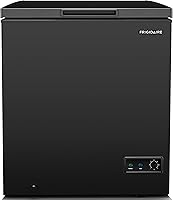
Choose the Frigidaire 5 cu ft if you want a dedicated second freezer for extra meals, vegetables and smaller meat purchases. It offers a middle step between a compact overflow unit and a wider family-stock freezer.
Its seven-setting thermostat controls cooling, while a removable vinyl-coated wire basket keeps small packages near the top. The aluminum liner and exterior defrost drain give you a straightforward interior to empty and clean.
The power-on light is useful for a quick glance, but it doesn't confirm safe food temperature. Pair it with a separate thermometer instead of treating an illuminated light as proof that everything is cold enough.
Skip it for large bulk orders that would leave little room to sort packages. Before buying for a very hot or cold garage, obtain the approved ambient limits for the exact model.
The title and capacity specifications identify this as a 5 cu ft freezer. Confirm that model number on your order, since its general description also mentions a different capacity.
Midea 3.5 cu ft: for modest stock and changing storage needs
Choose the Midea if you need compact overflow storage and want clear garage operating limits. Midea positions this size for 1–3 people, though shopping habits matter more than headcount.
Its convertible design is useful if your storage needs change between frozen meals and chilled food. It runs in one mode at a time, so switching requires moving anything that needs the previous temperature elsewhere.
A removable plastic basket helps separate small items, and adjustable legs help level the cabinet. Use the basket for frequently reached food so you don't need to unload the freezer for a single packet.
Skip it for bulky family stock-ups or if you regularly store large packages that are hard to rearrange. The small footprint helps with placement, but it doesn't create extra room inside.
Midea claims food can stay frozen for up to 48 hours after power loss. Don't use that claim as a food-safety countdown, since load, starting temperature and lid opening affect what happens during an outage.
Hamilton Beach 17 cu ft: for substantial bulk storage
Choose the Hamilton Beach if you regularly store enough food to justify a large cabinet. It makes more sense for planned bulk purchases than for scattered leftovers from the kitchen freezer.
The removable wire basket separates small packages, and the stay-open lid helps while you sort a larger load. A seven-setting thermostat, power-on light, two adjustable leveling legs and front-access defrost drain cover the main controls and maintenance needs.
A flat back doesn't remove the need for ventilation clearance. Leave the gaps required by the manual, even if the cabinet looks as though it could sit flush against a wall.
Skip it if you can't reach the bottom comfortably or don't want to manage labeled zones and an inventory. A large chest can become difficult to use when heavy packages bury food you need every week.
Confirm its permitted ambient range before choosing it for an unheated garage. Its garage-ready name doesn't give you the seasonal limits needed for that decision.
Frigidaire EFRF7003: for more food after a placement check
Choose the Frigidaire 7 cu ft if the smaller cabinets won't hold your normal stock and you have room for the wider body. It adds storage without moving to the much larger Hamilton Beach.
It includes a removable vinyl-coated wire basket, aluminum liner, seven-setting thermostat, power-on light and exterior defrost drain. Its freezer controls are straightforward, but garage suitability needs a separate check.
Skip it as an automatic garage choice based on its similarity to the smaller Frigidaire. Confirm that its manual permits your intended location and temperatures before ordering.
Compare 7 cu ft chest freezers with 5 cu ft chest freezers if you're choosing between those sizes. For larger loads, see large chest freezers of 10 cu ft and up.
Check your garage through heat and cold
Use the garage's seasonal extremes to judge suitability. A comfortable afternoon in spring tells you little about a closed garage during summer heat or a winter cold snap.
Place an ambient thermometer where the freezer will stand, away from direct sun and nearby heat sources. A min/max memory function helps capture overnight lows and afternoon peaks you might miss.
A week of readings is a starting point
Record temperatures for a week to understand daily swings, then account for seasons you haven't measured. A mild week's readings cannot guarantee year-round suitability.
Use your experience of the building and local seasonal weather to identify likely extremes. If you can't guarantee a suitable range, choose an indoor location rather than guessing.
Your readings describe the garage; they don't tell you what an appliance can handle. You still need operating limits for the exact freezer.
Our hot or cold garage selection guide walks through that comparison. See whether you can put a chest freezer in the garage for the wider placement checks.
Heat and cold require different attention
Summer heat makes it harder for a freezer to release heat into the room. Keep its ventilation space clear and avoid placing it beside equipment that warms the surrounding air.
Winter cold can also put an appliance outside its approved conditions. Don't assume colder garage air always makes a freezer work better.
Moving the cabinet away from a sunny door may help with local heat exposure. It won't turn an unsuitable garage into an approved environment.
Set up the space before the freezer arrives
Prepare a dry, level location with the required clearance and a suitable power connection. Doing this before delivery prevents a temporary placement from becoming a permanent compromise.
Measure every doorway and turn along the delivery route. Include thresholds, steps and the space needed for moving equipment, rather than checking door width alone.
Arrange help appropriate to the cabinet's size and weight. Keep the unit upright where possible, and follow its transport instructions if it has been tilted.
Read whether a chest freezer can lie on its side before planning a move that requires tipping. Follow the manual's settling period before connecting power.
Leave space for access and service
Keep the lid's full opening path clear of shelves, pipes and garage-door hardware. You should be able to reach the controls and drain without moving a loaded freezer.
Level the cabinet according to its instructions so the lid closes evenly. Avoid using the top as permanent storage, because clearing it each time discourages regular food rotation.
Follow the electrical instructions for the exact model. Don't choose a distant corner that depends on a makeshift power connection.
If the outlet condition or circuit suitability is uncertain, ask a licensed electrician. Keep the plug accessible without creating a trip hazard.
A garage-ready freezer still needs shelter
Garage-ready wording doesn't guarantee outdoor suitability. A covered patio or open carport can expose an appliance to moisture and weather beyond its intended use.
Read whether you can keep a chest freezer outside before choosing any location beyond an enclosed garage.
Hold the right temperature and plan for alerts
Keep frozen food at 0°F (-18°C) or below, and check with a separate thermometer. A thermostat number sets cooling effort; it doesn't tell you the actual temperature.
The USDA's freezing and food safety guidance explains that target. Our deep freezer temperature guide covers dial adjustments and readings.
Follow the manual for initial cooldown, and wait until the interior reaches its target before adding food. After changing a setting, allow the temperature to settle before adjusting again.
Use an alarm where you might miss a problem
An alarm is useful for a garage freezer you don't open daily. It can draw attention to warming food sooner than a power light you rarely see.
GoveeLife's two-sensor kit includes a gateway, app monitoring, email alerts and an audible alarm. Its probe covers -40°F to 158°F with stated accuracy of ±0.9°F.
Choose it if you want remote alerts and have 2.4 GHz Wi-Fi coverage at the garage. Skip the connected kit if a local display or alarm meets your needs and you don't want app setup.
The audible alarm is muted by default, so enable it during setup if you want sound. GoveeLife says the battery-powered sensor can sound a temperature alarm during a network disconnection, but remote notifications depend on connectivity.
Position the probe according to its instructions, away from direct contact with a freezer wall. Route the cable carefully and check that the lid gasket closes fully.
Compare alternatives in deep freezer thermometers and alarms. Check readings after restocking and during seasonal changes, since those are useful times to catch a developing problem.
Make an outage plan before you need it
Keep the lid closed during a power outage and note when the interruption began. Repeatedly opening it to check food adds warmth without restoring cooling.
Use temperature evidence and food-safety guidance when deciding what to keep. Neither an alarm nor an outage-duration claim guarantees that every package remains safe.
For remote alerts, choose someone who can act if you're away. A notification helps most when it leads to a prompt check of power, temperature and the lid.
Organize the freezer around how you cook
Group food by use, label packages and keep older items easy to reach. A cabinet you can search quickly is more useful than one packed tightly with forgotten food.
Use the top basket for small items and food you reach for often. Keep heavy packages lower down, and avoid balancing loose items where they can interfere with the lid.
Buy bins after measuring the interior
Measure usable space inside the cabinet, including the compressor hump and the route through the opening. Exterior dimensions and advertised capacity won't tell you whether baskets fit together.
MSERCUOR's four metal baskets each measure 15.1 × 8 × 6.5 in. Their handles fold inward for stacking, and the baskets fold for storage when empty.
Choose them for food categories you can lift comfortably, such as bagged vegetables or meal portions. Skip a full stack if accessing the bottom would require lifting more weight than you can manage.
Check the actual interior before buying, even though the baskets are aimed at 5 and 7 cu ft freezers. Don't assume all four will fit your preferred arrangement.
See chest freezer organizers and bins for other layouts. Our step-by-step freezer organization guide covers rotation and labeling.
Keep an inventory simple enough to maintain
Write the food name and freezing date on each package. Add new food behind or below older stock, while keeping frequently used items accessible.
A short list on the lid or a phone note can prevent duplicate purchases. Record broad quantities you will update, rather than a detailed system you'll abandon.
Leave room to lift a basket and move packages aside. Filling every gap may increase stored volume while making half the food hard to reach.
Defrost and clean without damaging the cabinet
Follow the manual's defrost instructions and protect the food before switching the freezer off. Plan the job when stock is low so you have less food to move.
Use suitable temporary cold storage, unplug the appliance as directed and prepare towels and a container for meltwater. Check the drain arrangement before frost begins to melt.
Don't chip ice with a knife or another sharp tool. Avoid unapproved heat sources, which can damage the liner or other parts.
Clean with products the manual allows, then dry the interior and drain area. Restart the freezer and restore its target temperature before returning food.
Our chest freezer defrost guide covers the sequence, and deep freezer cleaning guide covers surfaces and odors.
Inspect the gasket for trapped packaging and dirt during routine use. A lid that doesn't close fully can cause frost and warming that a colder dial setting won't solve.
Avoid mistakes that create extra work or food waste
The biggest buying mistakes are choosing from capacity alone and treating the garage label as permission for any conditions. Check climate fit, access and food habits together.
- Buying for one unusual shopping trip. Size for recurring needs unless that large order is part of your storage plan.
- Ignoring reach. Make sure you can retrieve food from the bottom without unsafe stretching.
- Ordering bins first. Measure the interior after choosing the freezer.
- Confusing power with cooling. A power-on light doesn't replace a temperature reading.
- Changing the dial repeatedly. Allow readings to settle before making another adjustment.
- Loading a large amount of warm food at once. Follow the manual's freezing-capacity guidance and cool prepared meals safely before freezing.
- Blocking access with garage storage. Keep the lid, controls, ventilation gaps and drain reachable.
For long-term planning, how long chest freezers last covers care and replacement decisions. Your day-to-day storage routine matters alongside the appliance you choose.
Compare freezer types and running costs before committing
Choose a chest freezer if bulk storage and top access fit your routine. An upright may suit you better if shelves and front access make food easier to find.
A chest needs space above the lid, while an upright needs room for its door swing. Think about your reach and package sizes before deciding from floor area alone.
Read chest freezer vs upright for access and storage trade-offs. The chest freezer vs upright power-use comparison covers efficiency.
Don't rank these four models by energy use from cabinet size or voltage alone. For cost estimates, use model-specific energy information and your electricity rate.
Our deep freezer wattage guide explains the calculation. ENERGY STAR's freezer guidance also covers placement and efficiency considerations.
If changing storage modes is a real need, read convertible vs standard chest freezer. For terminology, deep freezer vs regular freezer explains what those names mean.
Confirm warranty and model details before ordering
Check both warranty coverage and permitted installation conditions. A warranty term by itself doesn't confirm that your garage is an approved location.
All four freezers here have a 1-year warranty term. The Frigidaire 7 cu ft specifies parts and labor; confirm coverage details for the others rather than assuming the terms match.
Keep the receipt, model number and written answers with the manual. Ask these questions before committing:
- What ambient limits apply to this exact model in freezer mode?
- Does the warranty cover use in my intended garage conditions?
- What clearances and electrical connection does the manual require?
- What does service involve if the freezer needs repair?
- Does the full model number, including its suffix, match my order?
If capacity is settled and you want a closer model comparison, start with the Frigidaire 5 cu ft review, Midea 3.5 cu ft convertible review or Frigidaire EFRF7003 review.
For another compact option, read the Igloo 3.5 cu ft review.
Pick the garage ready chest freezer that fits your routine
Choose your garage ready chest freezer by climate fit first, capacity second and access third. Once all three work, useful extras can settle the choice.
- Choose Midea 3.5 cu ft for modest overflow, convertible use and published operating limits.
- Choose Frigidaire 5 cu ft for a dedicated meal-prep and grocery overflow freezer after confirming its garage limits.
- Choose Hamilton Beach 17 cu ft for substantial bulk storage when you have suitable space, access and approved conditions.
- Consider Frigidaire 7 cu ft when you need more storage than the smaller cabinets provide and its manual permits your location.
If no model fits your garage's seasonal conditions, change the location before compromising on the operating range. Use the hot or cold garage selection guide to make that final check before ordering.
Frequently asked questions
What is a garage ready chest freezer?
A garage ready chest freezer is designed for use within the garage conditions its brand allows; check the exact model's ambient temperature limits, rather than relying on the label alone. Those limits describe the air around the appliance, while the freezer should keep food at 0°F (-18°C) or below.
What temperature should a chest freezer hold?
Keep a chest freezer at 0°F (-18°C) or below, and use a separate thermometer to check it; a numbered thermostat dial doesn't show the actual temperature. Brief changes after opening the lid differ from a sustained warm reading, which needs prompt attention to protect the food.
Can a chest freezer go in an unheated garage?
Yes, if the exact model's approved ambient range covers that garage throughout the year; the Midea 3.5 cu ft model allows 0°F to 110°F in freezer mode. For the other freezers here, obtain the permitted range before choosing them for a garage with strong seasonal temperature swings.
What size chest freezer works best in a garage?
Choose capacity from the food you expect to store, then check the delivery route, ventilation gaps and lid clearance. A small household may need only an overflow freezer, while bulk meat orders require more room; household size alone won't tell you how much usable storage you'll need.
How heavy is a garage chest freezer?
The freezers here range from 35 lb for the Frigidaire 5 cu ft to 168 lb for the Hamilton Beach 17 cu ft. Weight is only part of the moving job, since a wide cabinet can be awkward even when empty; arrange suitable help and equipment before delivery.