Can You Put a Chest Freezer in the Garage?
Yes, you can put a chest freezer in the garage if its approved room temperature range covers your garage's seasonal extremes. Check ventilation clearance, lid space and the power supply before choosing a model.
On this page (7 sections)
- Can you put a chest freezer in the garage without climate control?
- Which freezer suits your garage and food habits?
- How much garage space should you allow?
- How should you move and start a garage freezer?
- Is a garage freezer alarm worth adding?
- What care and mistakes matter most in a garage?
- Can you put a chest freezer in the garage? Make the final choice
Yes, you can put a chest freezer in the garage if the freezer's approved room temperature range covers the heat and cold there. You also need a dry, stable spot with ventilation, lid clearance and a suitable outlet.
Start with temperature limits before choosing capacity. A freezer that fits neatly beside your workbench can still be the wrong choice for an unheated winter or a hot summer.
For the label's meaning, read what garage ready means on a chest freezer. Then match the exact model's limits to your garage.
Can you put a chest freezer in the garage without climate control?
Yes, if that model supports the full temperature range your garage reaches. A Garage Ready label is a starting point, but you need actual upper and lower limits to make the decision.
Measure near the planned freezer location, away from direct sunlight and hot equipment. A thermometer that records minimum and maximum readings is more useful than one afternoon's reading.
Recent readings won't capture every season. Consider past cold snaps and heat waves, especially if you measure during mild weather.
Putting a chest freezer in a cold garage
A cold garage still needs to stay within the freezer's approved operating range. Outdoor cold does not replace a working freezer, since daytime warmth and changing weather can affect food storage.
Keep the two temperatures separate: the ambient range describes the room, while 0°F or below is the target inside the freezer. The USDA's freezing and food safety guidance explains frozen food storage.
For help with the cabinet setting, see what temperature a deep freezer should be.
Putting a chest freezer in a hot garage
Heat makes the freezer work harder to release heat from its cabinet. Keep it out of direct sun, leave the required ventilation space and avoid enclosing it in tight shelving.
A fan does not make a garage safe when its air temperature exceeds the freezer's limit. Choose a supported model or another location; choosing a freezer for a hot or cold garage covers that decision.
Which freezer suits your garage and food habits?
Choose temperature compatibility first, then capacity and features. These three freezers serve different storage needs, and only Midea has a stated operating range in the information provided here.
Frigidaire: for modest overflow storage
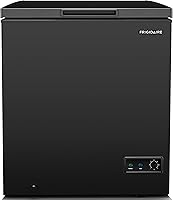
The Frigidaire EFRF5003 suits households storing extra meals, meat and frozen staples rather than large bulk orders. Its 5 cu ft capacity is a smaller commitment to floor space and food inventory.
The removable wire basket keeps small packages near the top. A seven-setting thermostat, power light and exterior defrost drain cover everyday controls and maintenance.
Its Garage-Ready name does not supply the temperature limits you need here. Confirm the approved ambient range in the manual before choosing it for an unheated or very hot garage.
Skip it if you need room for frequent bulk buys or cannot confirm that range.
Midea: for variable temperatures and changing storage needs
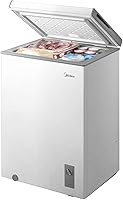
The Midea offers 7 cu ft of space and an approved range of 0°F to 110°F in freezer mode. It suits a garage within those limits and a household that needs more room than a small overflow freezer.
Its convertible design also allows refrigerator use, but fridge mode has a different range: 38°F to 110°F. Check the selected mode before storing food; fresh and frozen food need different conditions.
Midea says it can keep items frozen for up to 48 hours after power loss. Actual conditions matter, so keep the lid closed during an outage and assess food temperature before use.
Skip it if your garage exceeds its limits. The convertible feature also offers little value if you will always need frozen storage.
BLACK+DECKER: for bulk storage in a suitable indoor space
The BLACK+DECKER provides 10 cu ft for larger food inventories. Its stated uses include a kitchen or temperature-controlled basement, so choose it for a garage only after confirming that location meets the manual's requirements.
An exterior mechanical dial and indicator lights let you check controls without opening the lid. A removable basket, four leveling legs and manual defrost drain help with access and upkeep.
Skip it for an unconditioned garage unless the manual explicitly permits your conditions. It also makes little sense if extra depth would leave forgotten food buried at the bottom.
Choose capacity around food you regularly rotate, rather than the largest cabinet you can fit. The chest freezer size guide can help you plan that amount.
How much garage space should you allow?
Measure the cabinet plus ventilation clearance, open-lid height and standing room. The footprint alone does not tell you whether the spot works.
| Freezer | Width | Depth | Height |
|---|---|---|---|
| Frigidaire | 28 in | 23 in | 35 in |
| Midea | 30.3 in | 22 in | 33.5 in |
| BLACK+DECKER | 40.7 in | 29.5 in | 33.5 in |
Use each model's manual for required gaps. Check shelves, hooks and garage door tracks with the lid fully open, and leave room to reach the drain.
Choose a dry location away from the door threshold, vehicle paths and heat sources. Check the spot with a vehicle parked and the garage door in both positions.
A sloped garage floor may need adjustment at the freezer's feet. Level it as instructed and make sure it does not rock.
How should you move and start a garage freezer?
Plan the route, follow the settling instructions and cool the cabinet before loading food. Measure narrow doors and turns before delivery, and use help and suitable equipment for the move.
Keep the freezer upright where possible. If transport requires tilting, read whether you can lay a chest freezer on its side and follow the model's instructions before connecting power.
Use the outlet and circuit arrangement required by the manual. Avoid extension cords and power strips, keep the plug accessible, and ask an electrician if the garage supply does not meet those requirements.
Clean and dry the interior, connect power and check the temperature with a separate thermometer. A numbered dial is a control setting, not a temperature reading.
Wait until the cabinet reaches 0°F or below before adding frozen food. Add unfrozen food within the manual's freezing limits rather than filling the cabinet with warm groceries at once.
Is a garage freezer alarm worth adding?
An alarm helps when you may miss a warming cabinet for hours. It monitors a problem; it cannot make an unsuitable garage or freezer safe.
GoveeLife's kit includes two sensors and a Wi-Fi gateway, so you can monitor the freezer interior and garage air separately. It provides app, email and audible temperature alerts.
The gateway needs 2.4 GHz Wi-Fi. Check the connection at the actual location because walls and distance reduce wireless range.
Enable the buzzer during setup, since it is muted by default. The battery-powered sensor can sound locally during a network loss, but remote alerts depend on a working connection.
Place the freezer probe according to the instructions and confirm the lid seals around its cable. Skip this kit if you only need a basic local reading and will not use its connected alerts.
What care and mistakes matter most in a garage?
Keep the seal clean, rotate food and defrost before heavy frost builds up. Check temperatures during seasonal changes, since a location that works in spring may struggle in summer.
- Keep the ventilation gaps clear. Boxes, tools and stored bags can gradually block the space you allowed.
- Check the lid after loading. A raised package or badly placed cable can prevent a full seal.
- Label food with dates. Put older items where you can reach them and keep a simple inventory.
- Defrost as instructed. Move food to safe frozen storage first, and never chip ice with a sharp tool.
- Leave outage checks to a thermometer. A power light confirms power, not safe food temperature.
Use how to defrost a chest freezer for the maintenance steps. For daily access, how to organize a chest freezer explains how to separate small packets from bulky food.
Can you put a chest freezer in the garage? Make the final choice
Choose Midea when its stated range covers your garage and you need medium-size storage. Choose Frigidaire for smaller overflow needs after confirming its limits, or BLACK+DECKER for bulk storage in a location its manual allows.
If no suitable model covers your garage's extremes, move the freezer indoors. More capacity, an alarm or extra ventilation cannot override an ambient temperature limit.
Start with the garage ready chest freezer guide for the full setup picture, then compare the best chest freezers for the garage against your measurements.
A carport or rain-exposed space needs a separate decision. Read whether you can keep a chest freezer outside before treating it like an enclosed garage.
Frequently asked questions
Can you put a chest freezer in a garage with no climate control?
Yes, if the freezer's approved room temperature range covers the garage through every season; Midea's model here supports 0°F to 110°F in freezer mode. Measure near the planned location, allow for seasonal extremes, and choose another location if your garage exceeds either limit.
How much space does a chest freezer need around it?
Use the clearance specified in your exact model's manual; there is no single gap that suits every chest freezer. Measure the cabinet, ventilation space and fully open lid; leave access to the controls and drain, plus enough standing room to lift food out safely.
What temperature should a garage be for a chest freezer?
Keep the garage within the freezer's approved ambient range, which is separate from its food storage setting. The cabinet should hold food at 0°F or below; a room reading alone cannot confirm that food stays cold enough, so check the interior with a separate thermometer.
Do I need help moving a chest freezer into the garage?
Arrange help and suitable moving equipment rather than carrying a chest freezer alone; its size can make it awkward even when empty. Measure doorways, clear steps and obstacles, and follow the manual's moving instructions; keep it upright when possible and secure the lid during transport.
Should I wait before plugging in a freezer I just moved into the garage?
Follow your model's instructions for how long it should stand after moving, especially if it was tilted; set it in its final position first. After connecting power, let it reach the correct storage temperature before adding food, and follow any limits on loading unfrozen food.