Can You Lay a Chest Freezer on Its Side?
You can lay a chest freezer on its side only if its manual allows it. Follow its transport instructions and upright waiting time before plugging it in.
On this page (9 sections)
- Can you lay a chest freezer on its side for transport?
- What should you check before moving day?
- How do you prepare a chest freezer for a move?
- What is the safest order for the move?
- Which hand truck should you choose for a freezer?
- Should you buy a smaller freezer to simplify delivery?
- How do you set up the freezer after moving it?
- How do you know it is ready for frozen food?
- Can you lay a chest freezer on its side? Make the transport decision first
You can lay a chest freezer on its side only if its manual allows it. Upright transport is the preferred choice, and any permitted side transport must follow the instructions for your exact model.
A brief tilt onto a hand truck is different from a trip lying flat. Check both the allowed position and the required wait before you book a vehicle or start emptying the freezer.
Can you lay a chest freezer on its side for transport?
Side transport is an option only when the manufacturer permits it and explains how to do it. If the manual is silent, keep the freezer upright or ask the manufacturer for model-specific directions.
Compressor oil can move away from its normal position when a freezer lies down. Returning the cabinet upright allows oil to drain back, which is why transport position can affect the wait before startup.
There is no universal safe side or waiting time. Refrigerant tubing and compressor layouts differ, so advice for another freezer may not apply to yours.
A longer rest cannot make an unapproved transport position safe. Plan the vehicle around the appliance's instructions rather than assuming you can solve every transport problem by waiting afterward.
What should you check before moving day?
Find the transport instructions for the model number on the freezer's label. Check these points before choosing a route or renting equipment:
- Whether the freezer must remain upright.
- Whether a particular side may face down.
- How to secure and support the cabinet.
- How long it must stand upright before power is connected.
- Required ventilation space and placement conditions.
Keep a photo of those instructions on your phone. If the freezer arrives lying down, ask about its transport position so you can follow the correct startup directions.
When should a chest freezer stay upright?
Keep a chest freezer upright when the manual requires it or you cannot confirm that side transport is allowed. Choose a taller vehicle or an appliance delivery service if your vehicle would force an unapproved position.
Do not remove hinges, feet or other parts just to gain clearance unless the manual permits it. Protect exposed tubing and electrical parts from straps, impacts and contact with the vehicle floor.
How do you prepare a chest freezer for a move?
Move the freezer empty, defrosted and dry, with its loose parts removed. This reduces shifting weight and keeps meltwater off the route.
Transfer food to another working freezer or suitable cold storage before unplugging. Allow enough time for defrosting instead of trying to move a cabinet while ice is melting inside.
Follow how to defrost a chest freezer fast for the preparation steps. Never chip ice away with a sharp tool that could damage the interior.
Remove baskets, wipe up water and dry the cabinet. If it needs more than a wipe, follow how to clean a deep freezer before packing it for transport.
Secure the cord clear of the wheels and use a finish-safe method to hold the lid closed. Moving blankets protect surfaces, but keep padding clear of your grip and any load restraints.
What is the safest order for the move?
Measure and prepare the whole route before lifting anything. A clear path lets you move steadily without stopping with the freezer balanced in a doorway.
- Measure the cabinet, door openings, turns, vehicle opening and final space.
- Include room for the hand truck, padding and your hands.
- Clear rugs, cords and other trip hazards.
- Empty, unplug, defrost and dry the freezer.
- Position the hand truck as its instructions and the freezer manual direct.
- Secure the cabinet and check that the load cannot shift.
- Move with a helper, keeping the freezer upright wherever possible.
- Restrain it separately inside the vehicle so it cannot slide or topple.
- Set it upright and level in its final spot.
- Complete the required rest, then start it and check the temperature before reloading.
Never lift by the lid or handle. Stop if the load shifts or blocks your view enough that you cannot judge the route.
Which hand truck should you choose for a freezer?
Choose the truck by cabinet support, restraints and terrain, then check its capacity. A high load limit does not guarantee that a wide chest freezer will balance well on its base.
Harper 6781 for appliance moves involving steps
The Harper suits moves where appliance restraints and stair glides matter. Its 800 lb capacity, securing strap and steel frame make it the more purpose-built appliance option here.
The non-marking vinyl facing and soft-tread rubber wheels help reduce marks during indoor moves. Still use padding where the cabinet contacts the frame.
Choose Harper if the route includes entry steps and you have enough room to control the load. Skip a do-it-yourself stair move if the staircase is steep, narrow or has a tight landing; stair glides do not remove those limits.
Keep the strap clear of vulnerable parts and tighten it according to the truck's instructions. A strap should hold the appliance securely without crushing its cabinet.
Ironton for uneven ground and general hauling
The Ironton suits routes across rough concrete, asphalt or uneven ground. Its 10-inch pneumatic tires absorb bumps, while the P-style handle provides leverage for tilting and control.
It has a 600 lb capacity and a 14 by 8.5 inch toe plate. Check that this support fits the freezer's base before choosing it for a broad cabinet.
Choose it if outdoor rolling is the main challenge and you also need a general-purpose hand truck. Check tire condition and inflation before loading, and arrange suitable load restraints.
Skip this choice when you need built-in appliance stair glides. Large tires help over bumps, but they do not make a loaded freezer safe on stairs.
Should you buy a smaller freezer to simplify delivery?
Buy a smaller freezer when its storage space meets your needs and the delivery route rules out a larger cabinet. Measure first, because capacity alone does not tell you whether an appliance fits through a turn.
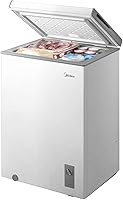
The Midea offers 3.5 cu ft of storage in a cabinet measuring 17.6 inches deep, 21.5 inches wide and 33.5 inches tall. It weighs 47.8 lb, so plan help even though it is a compact model.
Choose this Midea for modest overflow storage or if you need the option to switch between fridge and freezer modes. Its removable basket helps separate small items, and adjustable legs help with final leveling.
Skip it if your planned bulk purchases need more space. Use what size chest freezer do you need to estimate storage before choosing a cabinet mainly because it is easier to carry.
Its compact size does not guarantee permission for side transport. Follow the Midea manual for moving and startup directions.
How do you set up the freezer after moving it?
Place the freezer upright on a firm, level surface with the ventilation clearance its manual requires. Finish positioning it before starting the prescribed rest period.
Check that the lid opens fully and seals evenly. Keep the cord clear of pinch points and connect the freezer as its electrical instructions direct.
For a garage installation, check the room's seasonal temperatures before choosing the final spot. Read can you put a chest freezer in the garage and the garage ready chest freezers guide for placement help.
The Midea's freezer-mode ambient range is 0°F to 110°F; its fridge-mode range is 38°F to 110°F. Use the range for the mode you select.
How do you know it is ready for frozen food?
Check the inside temperature after the required rest and cooling period. A cold-feeling cabinet is not enough to confirm that it is ready for food.
PECULA's 2-pack provides battery-free analog readings from -20°F to 80°F. You can hang or place a thermometer where it is readable without burying it under packages.
Choose PECULA for simple manual checks. Skip it if you need a warning while the lid is closed or you are away; compare deep freezer thermometers and alarms instead.
Aim for 0°F (-18°C), following what temperature a deep freezer should be and the USDA's freezing and food safety guidance. Confirm that it holds the target before reloading.
Can you lay a chest freezer on its side? Make the transport decision first
Choose upright transport whenever the route and vehicle allow it. Use side transport only with clear permission for your model, the correct support and the required upright rest afterward.
Pick Harper for appliance features and steps, Ironton for uneven ground, and a compact freezer only when its storage capacity fits your needs. Add a thermometer to confirm recovery after the move.
For ongoing seal checks, cleaning and care, read how long chest freezers last.
Frequently asked questions
Can you lay a chest freezer on its side?
You can lay a chest freezer on its side only if its manual permits that transport position; keep it upright when possible, follow any instructions about which side may face down, and allow the required upright rest before connecting power. If the instructions are unclear, contact the manufacturer.
How long should a chest freezer stand upright before plugging in?
Use the upright waiting time specified for your exact model and transport position; there is no single wait that applies to every chest freezer, and first-use directions may differ from moving instructions. If it arrived lying down and you lack clear guidance, leave it unplugged while you contact the manufacturer.
Do I need help moving a chest freezer?
Arrange a helper for doorways, loading and other awkward parts of the move; cabinet width and balance matter as much as weight, especially when a freezer is strapped to a hand truck. For steep stairs or a route you cannot control safely, use appliance movers rather than adding more lifting effort.
Which hand truck works for a chest freezer?
Choose an appliance hand truck that supports the freezer securely and has enough capacity for the full load. Harper's 6781 suits appliance moves involving steps because it includes stair glides and a strap; Ironton's pneumatic-tire truck suits uneven ground, but you must also plan suitable restraints and check the cabinet fit.
Should you defrost a chest freezer before moving it?
Yes, defrost a freezer with ice buildup before moving it, following its manual. Remove food to suitable cold storage, unplug the appliance, collect meltwater and dry the interior; take out loose baskets so they cannot shift, and secure the power cord before moving the empty cabinet.