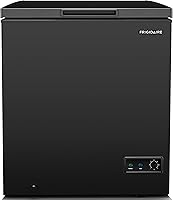
What Does Garage Ready Mean on a Chest Freezer?
A garage ready chest freezer is designed for use in a garage without climate control, within the brand's stated air temperature limits. Match those limits to your garage's winter lows and summer highs before buying.
On this page (10 sections)
- What is a garage ready chest freezer designed to handle?
- How do you read the garage temperature range?
- How should you measure your garage before buying?
- Which freezer fits your food storage habits?
- Is garage ready better than a regular chest freezer?
- Where should you put a garage ready freezer?
- How do you keep food organized and the freezer working well?
- What common mistakes should you avoid?
- Does garage ready mean you can keep it outside?
- Which garage ready chest freezer should you choose?
A garage ready chest freezer is designed to run in a garage without climate control, within the brand's stated air temperature limits. The useful question is whether those limits cover your garage through every season.
The label doesn't tell you the storage size, outdoor suitability or electricity use. Start with temperature compatibility, then choose the capacity and layout you'll use.
What is a garage ready chest freezer designed to handle?
A garage ready chest freezer is intended to handle changing air temperatures around the cabinet. Its operating range describes the room, while its thermostat controls the temperature inside.
That distinction matters because a cold garage doesn't automatically keep food safely frozen. The freezer still needs to maintain the right internal temperature as conditions change.
What a garage ready chest freezer label tells you
The label signals intended garage use, but the exact model's operating limits make that claim useful. Don't assume every garage ready freezer has the same limits.
Cold weather can affect how some freezers cycle, while high heat makes shedding heat harder. A model suited to a mild attached garage may be a poor choice for a detached garage with wider swings.
How do you read the garage temperature range?
Compare both ends of the approved range with your garage's seasonal extremes. For a convertible model, use the range for the mode you plan to run.
Midea's 3.5 cu ft convertible has an ambient range of 0°F to 110°F in freezer mode and 38°F to 110°F in fridge mode. Those are surrounding-air limits, not thermostat settings.
If your garage reaches 25°F in winter and 98°F in summer, both readings fit its freezer-mode range. The winter reading falls below its fridge-mode limit, so switching modes changes where it can operate.
Frigidaire and Hamilton Beach call the models below garage ready, but their information here doesn't include ambient limits. Ask each brand for the exact range before choosing either for extreme weather.
How should you measure your garage before buying?
Record minimum and maximum temperatures at the planned freezer location, then compare them with the model's limits. A thermometer that stores extremes is more useful than checking once each afternoon.
Place it away from direct sun, a heater or a warm vehicle. Measure at the proposed spot because conditions near the garage door may differ from those beside an interior wall.
A week gives you a starting point, not a full seasonal picture. Repeat the check during hot and cold weather, and leave some room between normal readings and the freezer's limits.
The GoveeLife sensor covers -40°F to 158°F with stated accuracy of ±0.9°F. Its 2-pack lets you monitor garage air and the freezer interior separately.
Check for a usable 2.4 GHz Wi-Fi signal where the gateway will sit. Remote alerts depend on connectivity, and the audible alarm is muted by default until you change its settings.
Skip this accessory if you only need occasional manual checks. For a freezer you rarely visit, remote alerts are useful; compare options in our deep freezer thermometer and alarm guide.
Which freezer fits your food storage habits?
Choose the smallest capacity that holds your normal stock with room to sort and retrieve it. Buying far more space than you can manage makes food easier to lose at the bottom.
Think in terms of your actual loads: weekly meal containers, bulky meat packages or seasonal harvests. Measure a few typical packages, and consider whether you can reach the bottom comfortably.
Frigidaire: for household overflow and meal prep
The Frigidaire EFRF5003 suits shoppers who need a middle option between a compact freezer and a large bulk-storage chest. Its 5 cu ft capacity is useful for meals, meat and overflow from the kitchen freezer.
A removable vinyl-coated wire basket keeps small packets near the top, and an exterior drain helps with defrost cleanup. The cabinet measures 28 in wide, 23 in deep and 35 in high, before clearance allowances.
Skip it if you need extensive bulk storage or can't confirm that its operating limits cover your garage. The Frigidaire 5 cu ft garage ready freezer review explains its features in more detail.
Midea: for small overflow loads and changing needs
The Midea 3.5 cu ft convertible suits smaller households with modest overflow storage or a need to switch between chilled and frozen storage. Its published mode-specific ranges make location planning clearer.
It measures 21.5 in wide, 17.6 in deep and 33.5 in high, with adjustable legs and a removable plastic basket. That compact footprint helps where garage floor space is tight.
Skip it for large bulk orders, and remember that it runs as a fridge or freezer rather than providing both at once. Move food elsewhere before changing modes and let the cabinet reach its new temperature.
Hamilton Beach: for large, planned food stocks
The Hamilton Beach 17 cu ft freezer suits households that regularly store large grocery loads, garden produce or bulk meat. Its stay-open lid helps while sorting, and a removable basket separates smaller items.
The cabinet is 70 in wide, 28 in deep and about 35 in high. It needs a clear delivery route and enough working space to reach across the opening.
Skip it if your normal overflow fits in a compact chest or you struggle to reach deep storage. Its flat back doesn't remove the need for the ventilation clearances in its manual.
Is garage ready better than a regular chest freezer?
Garage ready is useful when its approved range matches conditions that a regular model's range doesn't cover. It doesn't by itself guarantee better insulation, lower electricity use or longer life.
For a garage that stays close to indoor temperatures, a regular freezer may suit the space. Check its approved conditions rather than assuming indoor comfort means any appliance will work there.
Our garage ready vs regular chest freezer comparison explains how to weigh that choice.
Where should you put a garage ready freezer?
Put it on a firm, level surface with the ventilation space its manual requires. Leave enough room above the lid to open it fully, plus standing room to lift food safely.
Keep it away from direct sun and heat sources. Avoid a spot where stored tools, boxes or a parked car will block access or airflow.
Follow the manual's electrical instructions and use a suitable grounded outlet. If the outlet or circuit is uncertain, have an electrician check it before installation.
After delivery, follow the model's standing-time instructions before connecting power. Let the interior reach its storage temperature before adding food; garage freezer placement guidance covers the location checks.
How do you keep food organized and the freezer working well?
Keep the interior at 0°F or below for frozen food storage, and verify it with a thermometer. A numbered thermostat dial or power-on light doesn't show the food compartment's temperature.
Label packages with contents and dates, group similar foods, and keep an inventory near the freezer. Put older food where you'll reach it first, with small packets in the basket.
Avoid loading a large batch of warm food at once. Cool and divide cooked food safely before freezing, and follow the manual's guidance on how much fresh food to add.
Check the lid seal for trapped bags, crumbs and damage. Defrost when frost buildup reaches the level specified in the manual, protect the food elsewhere, and never chip ice with a sharp tool.
Our step-by-step chest freezer organization guide helps you create a layout that stays usable after grocery day.
What common mistakes should you avoid?
The biggest mistake is treating the garage ready name as permission to ignore operating limits. Confirm the range and warranty coverage for the exact model before ordering.
Also avoid these shortcuts:
- Using a summer reading to judge winter suitability.
- Measuring the cabinet but forgetting lid clearance and the delivery route.
- Assuming a convertible has the same limits in both modes.
- Packing food so tightly around baskets that retrieval becomes difficult.
- Treating an alarm as a guarantee against food loss.
Midea says its compact model can keep items frozen for up to 48 hours after power loss. Actual conditions matter, so keep the lid closed during an outage and check food condition before deciding what to keep.
Does garage ready mean you can keep it outside?
Garage ready does not mean outdoor ready. An ordinary garage provides shelter from rain and direct weather that a patio, yard or open carport may not.
Don't treat a cover as outdoor approval. Read can you keep a chest freezer outside before choosing an exposed location.
Which garage ready chest freezer should you choose?
Choose a garage ready chest freezer whose approved range covers your garage, then match capacity to your normal food stock. A temperature mismatch rules a model out before baskets, controls or cabinet size matter.
Choose Midea for compact overflow storage and mode flexibility. Consider Frigidaire for more everyday storage, or Hamilton Beach for large planned stocks, after confirming their ambient limits.
For the next step, use our hot or cold garage selection guide to check your conditions. Then compare the best chest freezers for garages, with the complete garage ready freezer guide as a reference.
Frequently asked questions
Is a garage ready chest freezer the same as a regular one?
A garage ready chest freezer is intended for garage conditions within the brand's operating limits. A regular freezer may also suit your space if its approved range covers the same temperatures; compare the exact models and their manuals, rather than assuming similar controls or baskets mean similar garage performance.
Does Frigidaire publish a garage temperature range?
The information available here for the Frigidaire EFRF5003 does not include an ambient operating range. Ask Frigidaire to confirm the limits for that exact model before choosing it for a garage with extreme temperatures; keep the written answer with the manual so you can check it against seasonal readings.
What range does Midea give for its garage ready models?
Midea gives its 3.5 cu ft convertible model an ambient range of 0°F to 110°F in freezer mode and 38°F to 110°F in fridge mode. These limits describe surrounding air, not food temperature; use the range for your chosen mode, and don't apply it to other Midea models.
How do I check a garage before I trust the label?
Record minimum and maximum temperatures where the freezer will sit, away from direct sun and heat sources. A week offers a starting point, but repeat the check during winter cold and summer heat; compare those extremes with the exact model's approved range before committing to that location.
Do I need a helper to move a garage ready freezer?
Plan help and suitable moving equipment rather than lifting a chest freezer alone. Hamilton Beach's 17 cu ft model weighs 168 lb, so arrange its delivery route carefully; measure doors, turns and steps, follow the manual's transport instructions, and confirm any required standing time before plugging it in.