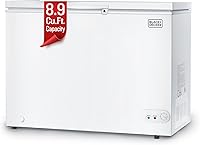
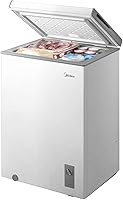
Chest Freezer vs Upright Freezer: Which Is Better? (November 2026)
Choose a chest freezer for bulky food and an upright for shelf access in a narrow space. In this chest freezer vs upright comparison, your reach, room layout and shopping habits matter more than the small capacity gap.
On this page (12 sections)
- Chest freezer vs upright: which fits your room?
- Which freezer suits the way you buy food?
- How much storage will you actually use?
- Which is easier to reach and organize?
- How should you set up either freezer?
- Can either freezer go in a garage?
- What care and defrosting does each need?
- Which uses less electricity?
- How do you keep food at the right temperature?
- Side-by-side specs for the Frigidaire chest and upright
- Which buying mistakes should you avoid?
- Chest freezer vs upright: which one should you buy?
Choose a chest freezer for bulky food and an upright for easy shelf access in a narrow room. The chest freezer vs upright decision comes down to how you shop, where the freezer will stand and what you can reach comfortably.
The Frigidaire chest offers 7.0 cubic feet of storage, compared with 6.5 cubic feet in the upright. That small gap matters less than whether your usual food packs fit and stay easy to find.
Both are freestanding units. This comparison focuses on their practical differences, including opening space, food storage, defrosting and setup.


Chest freezer vs upright: which fits your room?
The upright needs less floor space; the chest needs less cabinet height. Measure the whole working area, including ventilation clearances and room to open the freezer.
The chest measures 37 x 26 x 33 inches, in width, depth and height. The upright measures 23.5 x 23.5 x 57.5 inches in the same order.
Their cabinet footprints are about 6.7 and 3.8 square feet, respectively. These aren't installation-space requirements, since neither figure includes the clearances in the owner's manual.
A low shelf can rule out the upright, but it can also block the chest lid. Don't assume a short freezer will work under a counter just because its closed cabinet fits.
Chest freezer vs upright in a small corner
A corner favors the upright when its door can open far enough for full shelf access. Its reversible door lets you choose the opening direction to suit the room.
The flush back and recessed handle also help keep its shape compact. They don't remove the need for ventilation space or clearance beside the hinges.
Use painter's tape to mark the cabinet footprint, then stand where you'd load groceries. Check whether another person can still pass and whether nearby drawers, doors and appliances remain usable.
Which freezer suits the way you buy food?
Choose the chest for large packs and reserve food; choose the upright for a steady rotation of smaller items. Household size alone won't tell you which layout works better.
A couple who buys meat in bulk may need open storage more than a larger family that shops each week. Think about your largest grocery trip and the food that stays frozen between trips.
Who should choose the Frigidaire chest?
The chest suits batch cooks, bulk shoppers and households storing large bags or awkwardly shaped packs. Its open main compartment lets you group food without fitting every package between shelves.
Keep frequently used items in the removable vinyl-coated wire basket. Use the deeper space for food you don't need to reach every day.
Skip this model if reaching down into a bin is difficult or you dislike moving one package to find another. A wide empty floor area doesn't make a chest convenient if you can't comfortably reach its contents.
Who should choose the Frigidaire upright?
The upright suits households that grab frozen meals, vegetables and breakfast food throughout the week. Interior wire shelves and 2 door shelves give different foods separate places.
Choose it when seeing your choices matters more than having a large open bin. Shelves also make it easier to assign space to different household members.
Skip it if your usual purchases include tall containers or large boxes that may not fit between shelves. Check the usable shelf spaces before ordering if a particular package determines your choice.
How much storage will you actually use?
Choose capacity around the food you keep, with space to find and rotate it. A freezer packed beyond easy access can leave older meals buried until you forget them.
The half-cubic-foot difference between these models is modest. Don't choose the chest solely for that extra capacity if shelves would make more of your food accessible.
Start with a short inventory: bulk meat, meal portions, vegetables, bread and occasional large items. Note which categories need open space and which stack neatly in flat containers.
For batch cooking, consider how many portions you'll add before eating the previous batch. Buying a freezer around an unusually large shopping trip can leave you maintaining space you rarely need.
Our cubic feet guide helps turn those habits into a size choice. If neither model leaves enough usable room, change the size rather than forcing the wrong layout.
Which is easier to reach and organize?
The upright makes individual items easier to see; the chest needs a simple system to prevent digging. Choose a layout you can maintain during a rushed grocery unload.
A front door exposes several storage levels at once. A top lid gives access from above, but reaching the bottom can mean bending and lifting other packages.
Neither shape removes every reach problem. Shorter users may struggle with an upright's upper shelf, while low shelves can still require crouching.
Keep chest storage in liftable groups
Group food into categories such as meat, vegetables and prepared meals. Keep each group small enough that you can lift it without straining.
Avoid one heavy bin that fills the entire bottom. Several manageable groups are easier to rotate, and you can move one without unloading everything.
Date each package and move older food toward the next-use area. Our step-by-step guide to organizing a chest freezer explains a layout you can adapt.
If loose bags keep slipping between larger packs, our chest freezer organizers and bins guide can help you choose suitable dividers. Measure the interior before buying bins so they don't waste space.
Give upright shelves clear jobs
Assign shelves by food type or meal, then keep labels facing forward. Leave enough space to remove one container without pulling down a stack.
Use door storage for small packages that fit securely. Keep heavy or awkward items on a suitable interior shelf, following the manual's loading instructions.
Freeze soups and sauces in stackable portions rather than tall containers when possible. Consistent shapes make shelf space easier to use and help you see how much food remains.
How should you set up either freezer?
Install either unit on a suitable level surface, with the clearances and power connection its manual requires. Freestanding installation doesn't mean you can enclose the cabinet tightly.
Check the delivery route before the freezer arrives. Measure doorways, hallway turns and stairs, and include the handling room needed to guide the cabinet through.
Arrange help and suitable equipment for the move. The chest weighs 70 pounds and the upright weighs 50 pounds, but either can be awkward to carry safely.
Follow the manual's transport instructions and any required settling time before connecting power. Don't assume both freezers have the same startup procedure.
The chest uses 120 volts. Follow each unit's electrical instructions, and have an electrician assess an unsuitable outlet rather than improvising a connection.
Set the freezer level so its lid or door closes properly. Let it reach the required temperature before loading food, and keep vents clear as you fill it.
Can either freezer go in a garage?
Choose a garage location only after checking the exact model's permitted room-temperature range. Neither freezer's shape alone establishes that it can handle a hot or cold garage.
A garage can swing well beyond the conditions inside your home. Measure or track the room temperature through the seasons rather than judging it on installation day.
Our garage ready chest freezers guide explains how to match a freezer to that environment. It also helps you decide when a different model is the better choice.
Keep access practical wherever the freezer stands. A unit behind parked vehicles or stacked storage is harder to check, clean and use regularly.
What care and defrosting does each need?
The upright's automatic defrost reduces routine frost removal, while the chest's exterior drain helps manage water during defrosting. Both still need cleaning and seal checks.
For the chest, plan where the food will stay frozen before starting. Unplug it and follow the manual's directions for thawing and draining.
Protect the floor and direct meltwater into a suitable container. Never use a knife or another sharp tool to remove ice, since damage to the interior can ruin the freezer.
Our guide on how to defrost a chest freezer covers the process. Keep the drain area accessible so you don't have to move a full freezer when care is due.
Automatic defrost doesn't mean the upright needs no attention. Wipe spills promptly and keep airflow paths clear rather than filling every gap with food.
Clean either interior with the method approved in its manual, then dry it before restarting. Wipe seals and check for packaging caught across the closing edge.
The chest has an aluminum interior liner. Use gentle cleaning tools rather than scraping the surface, and keep abrasive cleaners away unless the manual allows them.
Which uses less electricity?
These figures don't guarantee an energy winner between the 2 models. The upright has an annual energy figure of 300 kWh, but there's no matching annual figure here for the chest.
Cold air tends to remain in a chest when its lid opens. That can favor the design, but it doesn't prove that this chest uses less power than this upright.
Compare annual kWh figures for exact models under comparable conditions. The ENERGY STAR freezer guidance explains the main buying considerations.
Our power comparison covers the differences between freezer types. Use it to understand the design trade-offs before comparing individual energy labels.
Running conditions matter too. Keep required ventilation clear, close the door promptly and avoid leaving either freezer open while sorting an entire grocery load.
Our power comparison also explains why shape alone isn't enough to predict consumption. For the difference between power draw and energy over time, see how many watts a deep freezer uses.
How do you keep food at the right temperature?
Use a freezer thermometer to confirm a temperature of 0 F (-18 C) or below. A control setting or power light can't confirm the temperature around your food.
USDA FSIS freezing guidance recommends that freezer temperature. Check it after setup and after changing the control setting.
The chest has a front thermostat knob with 7 settings and a power-on indicator. The knob adjusts cooling, while the light indicates power status rather than food temperature.
Allow the temperature to settle before adjusting again. Opening the freezer repeatedly to check it can interrupt that process.
Our freezer thermometers and alarms guide explains options for routine checks and alerts. Put temperature monitoring in place before filling either freezer with a large food order.
Side-by-side specs for the Frigidaire chest and upright
Compare the cabinet measurements with your room, then compare the opening with your daily routine. Storage volume matters only after both checks work.
| Product | Best for | Capacity | Size (W x D x H) | Opening | Our score |
|---|---|---|---|---|---|
| Frigidaire EFRF7003 7 cu ft Chest Freezer | bulk shoppers | 7.0 cu ft | 37 x 26 x 33 in | Top lid | 7.8 |
| Frigidaire 6.5 cu ft Upright Freezer | daily access | 6.5 cu ft | 23.5 x 23.5 x 57.5 in | Front door, reversible | 7.8 |
The chest favors flexible stacking and larger packages. The upright favors separate storage levels and a smaller cabinet footprint.
Both carry the same 7.8 score here. Their strengths serve different buyers, so the score doesn't replace checking fit, reach and package size.
Frigidaire backs the chest with a 1-year parts-and-labor warranty. Confirm coverage terms for either model before buying, including how service would work at your location.
Which buying mistakes should you avoid?
Avoid choosing by capacity alone or measuring only the closed cabinet. Most problems show up when you open, fill or maintain the freezer.
- Ignoring opening space: check the chest lid's path and the upright door's full swing, including nearby handles and walls.
- Assuming shelves fit every package: measure any bulky box or container you routinely store before choosing the upright.
- Overloading storage bins: keep chest groups light enough to lift, especially when reaching across the cabinet.
- Using the lid as permanent storage: a clear lid makes it easier to put groceries away and check food.
- Buying before checking the room: confirm ventilation, electrical requirements and allowed ambient temperatures before delivery.
- Skipping food rotation: put dates where you can read them and use older packages first.
Leave some room in your storage plan for changes in habits. A freezer that works only when every package is arranged perfectly will be harder to use after a busy shopping trip.
Chest freezer vs upright: which one should you buy?
Pick the Frigidaire chest for bulk food you can organize in liftable groups. Choose the upright when frequent shelf access and a narrow footprint make your daily routine easier.
If bending into deep storage is difficult, favor the upright and check which shelves you can comfortably reach. If large packages are your main need, favor the chest and reserve clear space above its lid.
For chest freezer vs upright, the deciding question is what happens during an ordinary week: are you retrieving individual meals or managing larger reserves? Choose the layout that makes those jobs easier.
Still unsure about size? Use our cubic feet guide before ordering, and check how many watts a deep freezer uses if you're planning the electrical setup.
Our deep freezer vs regular freezer guide explains the terms if they're making the choice unclear. Browse more chest vs upright comparisons when you need a different capacity or feature mix.
Frequently asked questions
Is a chest freezer better than an upright?
A chest freezer is better for bulky packs and less frequent access, while an upright suits food you grab each day. Choose by reach and room layout first; a chest needs clear space above its lid, and an upright needs space in front for its door.
How much floor space does a chest freezer need?
This Frigidaire chest covers about 6.7 square feet before ventilation and working space, compared with about 3.8 for the upright; those figures describe the cabinets only. Follow the manual for clearances, then allow enough room to open the freezer and stand comfortably while removing food.
Which uses less power, a chest freezer or an upright?
Compare annual energy figures for the exact models rather than choosing by freezer shape alone; the Frigidaire upright has an annual figure of 300 kWh, but a matching figure isn't available here for the chest. Room temperature, door openings and maintenance also affect actual energy use.
Can an upright freezer hold as much as a chest?
An upright can match a chest's capacity if you choose comparable sizes, but these models differ slightly; the chest holds 7.0 cubic feet and the upright holds 6.5. Package shape matters too: large boxes may fit an open chest more easily than the spaces between upright shelves.
Do you need help moving a chest freezer?
Arrange help and suitable moving equipment for either freezer; the chest weighs 70 pounds and the upright weighs 50, but bulk, stairs and tight turns matter as much as weight. Measure the delivery route and follow the manual for transport position and any settling time before startup.