Deep Freezer vs Regular Freezer: What Is Different? (November 2026)
Deep freezer vs regular freezer is mainly a choice about storage and access, not a colder temperature. Choose a chest for bulk food, an upright for shelves, or your fridge freezer if it already holds enough.
On this page (15 sections)
- Deep freezer vs regular freezer: what actually changes?
- When is your fridge freezer enough?
- Who should choose a chest freezer?
- Who should choose a compact upright?
- How much freezer space do you really need?
- Does a deep freezer get colder than a regular freezer?
- Which freezer uses less electricity?
- Will the freezer fit when it's open?
- Can either Kismile freezer go in a garage or bedroom?
- How should you set up a new freezer?
- How do you keep food easy to find?
- What care does either freezer need?
- Which common buying mistakes should you avoid?
- Side-by-side specs for the Kismile chest and upright
- Deep freezer vs regular freezer: make the final choice
Deep freezer vs regular freezer is mainly about storage layout and access, not a colder temperature. A chest suits bulk food, an upright puts food on shelves, and a fridge freezer may be enough for weekly shopping.
“Deep freezer” often means a chest, but stand-alone uprights can also carry that name. Choose by the food you store and the space you have.
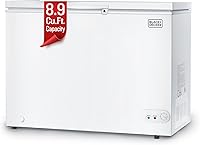
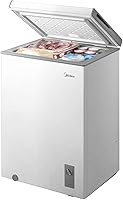
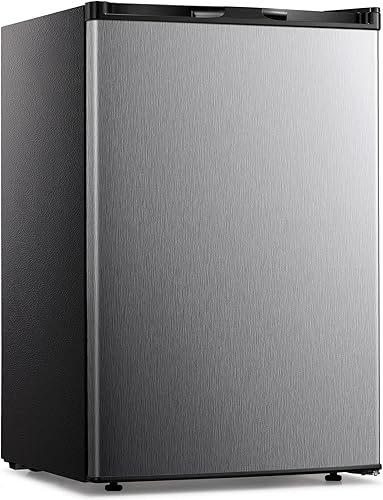
These 2 compact Kismile units show the practical differences between a top-opening bin and a front-opening cabinet.

Deep freezer vs regular freezer: what actually changes?
The useful differences are the opening, storage layout and separate capacity. The name alone doesn't tell you how cold a freezer runs or whether it prevents frost buildup.
A chest freezer opens from above and holds food in a deep compartment. An upright opens from the front and divides the space with shelves or drawers.
A fridge freezer shares its cabinet with the fresh-food section. Buying a stand-alone unit adds frozen storage without replacing a fridge that still meets your needs.
Don't assume “deep” means food needs a special, colder setting. All these formats should maintain a suitable frozen-food storage temperature.
Our chest freezer vs upright guide compares the 2 stand-alone shapes using a larger Frigidaire pair.
When is your fridge freezer enough?
Keep using your fridge freezer if it holds your normal food without crowding or hiding packages. An extra appliance adds cleaning, floor space and another food inventory to manage.
A fridge freezer suits frequent grocery trips, modest batch cooking and households that use frozen food within a regular weekly routine. Easy access beside the fridge can matter more than extra capacity.
Before buying, remove empty boxes, group similar foods and check what has been sitting untouched. Poor organization can make enough space feel too small.
Add a separate freezer when planned food regularly exceeds the space available. Examples include freezing several meals at once, storing seasonal produce or dividing larger meat packs into portions.
Skip the extra unit if the main plan is buying more food simply because there's room. Storage only helps when you can find and use what you freeze.
Who should choose a chest freezer?
Choose a chest for food you store in batches and retrieve a few portions at a time. Its open bin suits grouped bags, stacked meal packs and larger packages that don't fit neatly between shelves.
The Kismile chest has 2 removable baskets for smaller items. Its balanced lid stays open at 45, 75 or 90 degrees, leaving your hands free while you move packages.
Keep frequently used portions near the top and reserve lower space for longer-term stock. Flat bags and labeled groups make better use of the bin than a pile of loose, uneven packages.
Skip a chest if reaching the bottom is difficult or you dislike moving food to reach another layer. A small cabinet can still demand an awkward reach when something sits in a back corner.
A chest also needs a permanent home with clear space above it. It won't suit a spot where you need the top as a work surface.
Who should choose a compact upright?
Choose an upright for food you reach for often and want to see on shelves. It suits weekly meal portions, frozen vegetables and smaller packages that can be grouped without deep stacking.
The Kismile upright has 2 removable shelves, a front temperature dial and a reversible door. Changing the door direction helps when a nearby wall would otherwise block access.
Its handle is at the top, but the lower shelf still requires bending. Check the whole reach, from opening the door to lifting a package from the lowest storage area.
Skip this format if most of your food comes in tall or bulky packs. Removing a shelf creates height, but it also removes a storage level.
A front-opening door also needs clear floor space. Make sure someone can stand beside the open door without blocking a narrow kitchen walkway.
How much freezer space do you really need?
Size the freezer around the food you keep at one time, not the biggest grocery trip you can imagine. Separate your normal weekly stock from food you want to hold for longer.
The chest holds 3.2 cu ft, while the upright is named 3.0 cu ft. Kismile's upright capacity descriptions also include 3.2 cu ft, so confirm usable space if that difference affects your choice.
Don't treat a small capacity gap as the deciding factor. A shelf that fits your meal containers can be more useful than extra room you can't reach easily.
Make a simple inventory before ordering:
- Count the meal portions you normally freeze.
- Note your largest meat pack, container or frozen-food box.
- Include seasonal food only if you actually store it.
- Leave enough working room to move and find packages.
Our freezer size and cubic feet guide helps turn that inventory into a capacity choice.
Does a deep freezer get colder than a regular freezer?
A deep freezer doesn't automatically run colder than a regular freezer. For food storage, focus on maintaining 0 F (-18 C) or below, rather than choosing the lowest possible dial setting.
Both Kismile units have 7-setting controls with a range from 6.8 F to -7.6 F. That means the warm end is above the recommended storage target.
The USDA freezing and food safety guide explains the 0 F target. Freezing preserves food, but it doesn't make previously mishandled food safe.
Deep freezer vs regular freezer temperature checks
Use a freezer thermometer in either format. The dial numbers indicate warmer or colder settings, not a measured temperature.
Place the thermometer where you can read it without a long search, following its placement instructions. Check after the freezer settles and again after a large food load or a major room-temperature change.
Our deep freezer thermometers and alarms guide covers tools for checking the temperature and spotting a warming cabinet.
Which freezer uses less electricity?
Compare the exact models' energy figures rather than assuming every chest uses less power. Kismile gives a lower daily figure for this upright than for this chest.
Kismile says the chest uses 0.68 kWh per day and the upright uses 0.6 kWh. Those figures work out to about 248 and 219 kWh per year, respectively.
Actual use changes with room temperature, door openings, food loads and the selected setting. For a household cost estimate, multiply the annual kWh figure by your electricity rate.
Chest designs often benefit from keeping cold air in the bin when opened. That advantage doesn't outweigh every other difference in insulation, controls or compressor operation.
Compare annual energy labels and use the ENERGY STAR freezer guidance when shopping. A running wattage figure measures something different from energy used across a day.
See how many watts a deep freezer uses for that distinction, or our chest freezer vs upright power use guide for a broader comparison.
Will the freezer fit when it's open?
Measure the operating space, not just the closed cabinet. Include ventilation gaps, the lid or door opening, and room for you to lift food out.
The chest measures about 20.7 in wide, 17.1 in deep and 31.9 in high. The upright measures about 20.5 in wide, 20.3 in deep and 31.7 in high.
The chest is shallower, but it needs headroom. The upright needs a door swing in front, plus enough clearance to pull out shelves and remove larger containers.
Mark the cabinet outline on the floor with removable tape. Then open nearby cupboard doors and walk through the room as you normally would.
Neither unit should be treated as a built-in appliance just because it fits below a counter. Follow the manual's clearance requirements and keep ventilation openings clear.
Measure the delivery route too, including doorways, stairs and corners. A good storage spot is no help if the cabinet can't reach it safely.
Can either Kismile freezer go in a garage or bedroom?
Confirm the allowed room-temperature range before choosing a garage location. Neither unit has a garage-ready temperature range provided here, so don't assume either suits an unheated or very hot garage.
A room that feels acceptable for part of the year may fall outside an appliance's limits in summer or winter. Check the manual for the exact model before placing it there.
Our garage ready chest freezers guide explains how that differs from ordinary indoor placement.
For bedrooms, Kismile says both units run below 40 dB. That doesn't promise silence, since compressor starts and vibration can stand out in a quiet room.
Choose a firm, level spot away from the bed if possible. Keep the appliance out of escape routes and give the door or lid enough room to open safely.
How should you set up a new freezer?
Follow the model's transport and startup instructions before loading food. The waiting period after delivery and the cooling period after switching on serve different purposes.
Kismile instructs you to leave the chest upright for at least 24 hours before first use. For the upright, it recommends starting at dial setting 4 and waiting 24 hours before adjusting the temperature.
Use this setup order:
- Put the freezer in its final position with the required clearances.
- Check that it stands steadily and the seal closes evenly.
- Follow the manual's electrical instructions and avoid a shared power strip.
- Complete the required waiting and cooling periods.
- Confirm a stable storage temperature with a thermometer.
- Add food without blocking any vents or overloading shelves.
The upright's adjustable feet help steady it on an uneven floor. They don't replace a sound, level support surface.
Cool cooked food promptly using safe cooling methods before freezing it. Divide large amounts into smaller portions rather than putting a deep, hot pot into the freezer.
How do you keep food easy to find?
Give every food group a fixed place and label packages before they go in. Organization matters more as the freezer fills, especially when lower layers disappear from view.
In a chest, group food in liftable sections rather than stacking individual bags at random. Keep labels facing upward and avoid filling baskets so heavily that moving them becomes awkward.
In an upright, assign shelves by use, such as ready meals, vegetables and raw ingredients. Keep raw meat securely wrapped so leaks during handling don't spread onto other packages.
Freeze suitable foods flat in sealed bags before stacking them. Label each package with its contents and freezing date, then place older portions where you'll reach them first.
Keep a short inventory near the freezer or on your phone. Cross items off when you take them out, rather than relying on memory.
Our step-by-step chest freezer organization guide shows how to arrange layers without losing food at the bottom.
What care does either freezer need?
Keep the seal clean, manage frost and clean spills promptly. Don't assume a front-opening freezer is frost-free, because door shape doesn't tell you the defrost method.
Check the manual for the correct defrost process and the point at which frost needs attention. Move food to suitable frozen storage before switching the appliance off for cleaning.
Don't chip ice with a knife or other sharp tool. You can damage the cabinet or cooling parts hidden behind the inner surface.
Wash removable parts as directed and wipe the interior with a mild cleaning solution. Dry everything before restarting so leftover moisture doesn't become fresh frost.
Check the seal for crumbs, sticky spills or packages trapped across the edge. A door can look nearly closed while still leaving a gap that lets warm, moist air inside.
Which common buying mistakes should you avoid?
Avoid choosing by name, closed dimensions or capacity alone. Those shortcuts miss the parts that decide whether the freezer works in your home.
- Buying too large: extra space encourages forgotten food if you don't track it.
- Ignoring reach: consider lifting a full package from the bottom, not just opening the lid.
- Trusting the dial: verify the storage temperature instead of assuming a middle setting is right.
- Blocking access: leave room for the opening and for nearby appliances.
- Assuming garage suitability: check the allowed ambient range before delivery.
- Overpacking: leave the clearances around vents and shelves that the manual requires.
Also think about an outage before the freezer is full. Keep a thermometer inside, minimize openings during a power cut and follow food-safety guidance before deciding what to keep.
Side-by-side specs for the Kismile chest and upright
Use the table to check fit after choosing your preferred storage layout. The capacity difference is small enough that access and package shape deserve more weight.
| Product | Best for | Capacity | Size (W x D x H) | Opening | Our score |
|---|---|---|---|---|---|
| Kismile 3.2 cu ft Chest Freezer | bulk meal storage | 3.2 cu ft | 20.7 x 17.1 x 31.9 in | Top, hinged lid | 8.0 |
| Kismile 3.0 cu ft Upright Freezer | everyday food access | Nominal 3.0 cu ft | 20.5 x 20.3 x 31.7 in | Front door, reversible | 7.6 |
Measure your largest regular food container before ordering. For the upright, shelf spacing matters; for the chest, check whether you can lift that container through the opening and reach it safely.
Deep freezer vs regular freezer: make the final choice
Pick the chest for planned bulk storage, the upright for frequent shelf access, or your fridge freezer if it already does the job. The best deep freezer vs regular freezer decision starts with your routine.
Choose the Kismile chest when you can reach into a bin and have clear space above it. Choose the Kismile upright when seeing smaller packages at the front will help you use them.
If neither layout solves a clear storage problem, keep organizing the space you have. Buying another freezer makes sense when the food plan, location and access all work together.
For more compact chest options, compare our best 3.5 cu ft mini chest freezers and small chest freezers for small spaces.
If your main uncertainty is still the opening style, our chest freezer vs upright comparison helps you weigh access against bulk storage.
Frequently asked questions
Is a deep freezer the same as a chest freezer?
Deep freezer often means a chest freezer, but the term also covers stand-alone uprights; it doesn't guarantee a lower temperature than a fridge freezer. Compare the actual cabinet shape, storage layout and temperature controls rather than choosing by the name alone.
Is a regular freezer better than a deep freezer?
A regular fridge freezer is better if it already holds your weekly food without crowding; add a chest for bulk storage or an upright for easier shelf access. Extra capacity only helps if you use the food, have a suitable spot and keep track of what's inside.
How cold does a small deep freezer need to get?
Keep a small deep freezer at 0 F (-18 C) or below for frozen food storage; both Kismile units have controls that reach below that target, but a dial number doesn't confirm the actual temperature. Use a freezer thermometer and check the reading after the temperature settles.
Do these small freezers use a lot of power?
Kismile gives daily energy figures of 0.68 kWh for the chest and 0.6 kWh for the upright; your use will depend on room temperature, settings and door openings. Compare annual energy labels for the exact models, and multiply annual kWh by your electricity rate to estimate running cost.
Can an upright freezer go in a bedroom?
A compact upright can suit a bedroom if its manual allows the room conditions and you can provide ventilation and safe electrical access; Kismile says this model runs below 40 dB, but compressor sounds may still be noticeable at night. Keep the door swing clear of your walking path.