Chest Freezer vs Upright Efficiency: Which Uses Less Power? (November 2026)
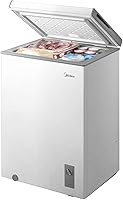
For chest freezer vs upright efficiency, a chest often uses less electricity at a similar capacity, partly because its top opening retains cold air. Compare annual kWh before choosing between these BLACK+DECKER models, since neither has a yearly energy figure supplied here.
On this page (12 sections)
- Chest freezer vs upright efficiency: what actually saves power?
- Which energy numbers should you compare?
- How much could an energy difference matter?
- Who should choose the BLACK+DECKER chest?
- Who should choose the BLACK+DECKER upright?
- How do the two freezers compare beyond power?
- Where should you put either freezer?
- How should you set up and load a freezer?
- How can organization reduce wasted energy and food?
- What care helps either freezer run efficiently?
- Which mistakes lead to the wrong efficiency choice?
- Chest freezer vs upright efficiency: which should you buy?
A chest freezer often uses less electricity than a similar-size upright, but annual kWh is the best way to compare specific models. Chest freezer vs upright efficiency also depends on where you put the freezer, how you fill it and how quickly you find food.
The BLACK+DECKER models here offer similar storage capacity in different shapes. Choose between them by matching energy use, available space and your food habits, rather than treating the chest's wattage as proof of lower running costs.

Chest freezer vs upright efficiency: what actually saves power?
Chest freezers often have an efficiency advantage, partly because cold air tends to remain inside their top-opening cabinets. An upright can lose more cold air through its front opening, but cabinet design and daily use still matter.
Warm, humid air entering either freezer adds heat and moisture. The freezer must remove that heat, while some moisture can become frost on cold surfaces.
Opening style is only part of the comparison. Insulation, door seals, room temperature and defrost design can change how much electricity a particular model needs.
Both freezers here use manual defrost, so this comparison does not involve an automatic defrost heater. Don't assume an upright is frost-free simply because it stands vertically.
Chest vs upright efficiency with frequent access
Fast, planned access helps either layout, especially in a household that opens the freezer several times a day. A well-organized upright can make dinner ingredients easier to find than a chest filled with loose bags.
A chest suits food that stays stored between planned withdrawals. Think bulk meat divided into meal portions, seasonal produce or batches of meals that you collect once a week.
Choose the layout that lets you close the door or lid promptly. A theoretical advantage means less if you spend several minutes searching for one buried package.
Which energy numbers should you compare?
Compare annual kWh for the exact models, since that measures energy over time. Watts describe power at a particular moment or operating condition, so they cannot tell you a freezer's yearly consumption alone.
The BLACK+DECKER chest has a 72-watt specification. The information available here provides neither an upright wattage nor annual kWh for either freezer, so it does not guarantee an energy winner between them.
Don't interpret that missing upright figure as evidence of poor efficiency. It means you need both EnergyGuide labels before making an electricity-based choice.
Read annual kWh first, then check capacity and defrost type. The ENERGY STAR freezer guidance explains the broader efficiency choices, while our deep freezer wattage guide separates power draw from energy consumption.
Both units use R600a refrigerant and carry ETL safety certification. Neither detail tells you which freezer will consume less electricity in your home.
How much could an energy difference matter?
Turn the annual kWh difference into a yearly cost, using your electricity rate. Multiply the difference by the cost per kWh on your bill to see what the efficiency gap means for your household.
For example, a hypothetical gap of 40 kWh a year at 20 cents per kWh equals 8 dollars annually. That is an illustration, not an estimate for either BLACK+DECKER model.
A small annual difference may be worth accepting for a freezer that fits your room and keeps food easy to find. A larger difference deserves more weight if both models meet your storage needs equally well.
You can also divide annual kWh by 365 for a daily average. Avoid treating that average as a fixed daily allowance, since hot weather, loading and door use change consumption.
Energy per cubic foot can add context when capacities are close. Don't use that ratio alone to justify a larger freezer, because unused capacity still takes space and can add to total energy use.
Who should choose the BLACK+DECKER chest?
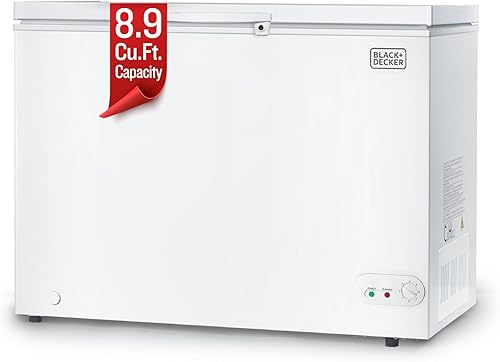
Choose the chest for bulk storage and planned access, provided you have room for its wide cabinet and an unobstructed lid. Its 8.9 cu ft capacity suits households that separate large food purchases into organized batches.
The cabinet measures 44.3 x 22.8 x 33.5 inches, measured width, depth and height. Mark that rectangle on the floor before ordering, then allow the ventilation space required by the manual.
Its removable basket gives smaller or frequently used food a place near the top. Below it, group larger packages by food type so you can lift out one group instead of moving individual bags.
The exterior mechanical dial has 7 settings, plus power and compressor indicator lights. You can adjust the control without opening the lid, though a thermometer is still needed to confirm the temperature.
Skip this chest if reaching into deep storage is difficult or if nearby shelves would block the lid. It is also a poor match for households that want every small package visible at once.
The accessible drain helps with planned defrosting. It reduces the difficulty of handling meltwater, but you still need somewhere safe to hold frozen food during the job.
Who should choose the BLACK+DECKER upright?
Choose the upright for daily food retrieval and narrow floor space, especially if you store many small packages. Its 8.5 cu ft capacity is close to the chest's, so the main difference is how you reach that storage.
This cabinet measures 23.4 x 25.4 x 58.3 inches, measured width, depth and height. Check the door's full opening path as well as the space occupied by the closed cabinet.
The 3 full-width shelves and 4 door bins let you separate vegetables, prepared meals and smaller items. Keeping those groups visible can help you use older food before buying duplicates.
Its mechanical control offers 3 settings, from Cold to Coldest. Adjustable leveling legs help you position the cabinet according to the installation instructions.
Skip this upright if oversized packages dominate your storage or the door would block a narrow walkway. Check the usable shelf openings before assuming a large box or bulky cut of meat will fit.
This model also requires manual defrost. Buy it for its layout and access, rather than expecting the maintenance routine of a frost-free upright.
How do the two freezers compare beyond power?
Storage access and room fit separate these models more clearly than the available energy figures. The chest favors bulk loading, while the upright favors visible food groups in a narrower cabinet.
| Product | Best for | Capacity | Power specification | Size (W x D x H) | Our score |
|---|---|---|---|---|---|
| BLACK+DECKER 8.9 cu ft Chest Freezer | bulk meal storage | 8.9 cu ft | 72 watts | 44.3 x 22.8 x 33.5 in | 8.0 |
| BLACK+DECKER 8.5 cu ft Upright Freezer | daily meal access | 8.5 cu ft | Wattage unavailable for this comparison | 23.4 x 25.4 x 58.3 in | 7.4 |
The scores reflect storage features and suitability for these uses; they are not measured energy-efficiency results. Neither score establishes which freezer has the lower annual consumption.
Choose capacity around the food you expect to keep through a normal shopping cycle. Our freezer size guide helps you judge that need before giving up floor space to extra storage.
If the names are confusing, our deep freezer vs regular freezer guide explains the terms. A “deep freezer” name alone tells you nothing about annual electricity use.
Where should you put either freezer?
Use a location within the model's allowed ambient-temperature range, with the ventilation space its manual requires. A cool indoor room away from ovens, heaters and direct sun gives either freezer a better starting point.
Do not squeeze a freestanding freezer into a tight enclosure just because its cabinet fits. Heat must escape around the unit, and the lid or door needs enough room for normal use and maintenance.
No exact installation clearances or full ambient-temperature ranges are provided here. Check those requirements before choosing a location, especially if a wall, cabinet or overhead shelf limits the space.
For these models, a kitchen or temperature-controlled basement is the straightforward choice. Do not assume a garage is suitable through summer and winter without confirming the permitted room temperatures.
Our garage-ready freezer guide explains what to check. If your garage falls outside either model's limits, the chest freezers for garages comparison offers another place to start.
Measure the delivery route too, including doorways, corners and stairs. Arrange enough help to move the appliance safely, and follow the manual's transport and settling instructions before switching it on.
How should you set up and load a freezer?
Let the freezer reach its storage temperature before loading food, following the startup instructions in the manual. Use an appliance thermometer rather than judging readiness by cold air or an indicator light.
USDA FSIS freezing guidance recommends keeping the freezer at 0 F (-18 C). A numbered dial does not show degrees, so confirm the actual temperature after the cabinet settles.
Start with a manageable load and follow any freezing-capacity instructions in the manual. Adding a large amount of unfrozen food at once increases the cooling load and can warm nearby frozen packages.
Pack food in meal-size portions, remove excess air from suitable packaging and label each package with its contents and date. Flat packs are easier to stack and retrieve than uneven bundles.
Keep food clear of the gasket and any areas the manual says must remain open. Never force the door or lid shut over an overfilled cabinet, since a poor seal admits warm, moist air.
How can organization reduce wasted energy and food?
Give each food group a fixed place, then keep a short inventory outside the freezer. You can decide what to remove before opening it, rather than searching while warm air enters.
For a chest, use manageable groups that lift out without unpacking the whole cabinet. Keep food needed this week near the top, with longer-term supplies below it.
For an upright, assign shelves by meal type or food group and avoid hiding small bags behind tall packages. Put older food at the front so it gets used first.
Our step-by-step chest freezer organization guide shows how to build a system around your shopping habits. Choose containers only after checking that they leave food accessible and fit beneath the closed lid.
Frozen food adds thermal mass, which helps slow temperature changes. That does not mean stuffing every gap saves electricity, or that you should buy a larger cabinet simply to keep it full.
What care helps either freezer run efficiently?
Keep the seal clean, control frost and maintain ventilation. These habits help either design hold its temperature without avoidable heat entering the cabinet.
Wipe crumbs and residue from the gasket, then check that it closes evenly all the way around. Packages caught against the seal can cause moisture entry and frost even when the door looks almost shut.
Defrost when frost reaches the threshold given in the manual. Heavy buildup can reduce usable space and interfere with heat transfer, so do not wait until food becomes difficult to remove.
Move food to suitable cold storage before unplugging the freezer for defrosting. Use towels and a suitable water container, and never chip ice with a knife or another sharp tool.
The chest's drain gives meltwater an exit, but you still need to manage where it goes. Our chest freezer defrosting guide explains how to plan the job and protect the surrounding floor.
Clean accessible ventilation areas as the manual directs, with the appliance safely disconnected when required. After restarting, confirm that the cabinet is cold enough before returning food.
Which mistakes lead to the wrong efficiency choice?
The biggest mistake is choosing from a single power number instead of the full storage problem. A freezer must fit your room, hold your food and suit your access needs before a small energy difference becomes useful.
- Calling the chest the proven winner: its wattage does not guarantee lower annual consumption than this upright.
- Assuming every upright is frost-free: both models here need manual defrost.
- Buying extra capacity without a plan: compare your normal stock level with the space you are giving up.
- Ignoring the opening space: a cabinet can fit while its door or lid remains awkward to use.
- Using the coldest setting by default: adjust to maintain the recommended temperature, rather than chasing the lowest possible temperature.
- Assuming more dial settings mean better temperature control: verify the result with a thermometer instead of counting dial positions.
If you want to measure consumption after installation, use a suitable plug-in energy meter according to its instructions and the freezer's electrical requirements. Measure several normal days, since startup and a major food load can distort a short reading.
Chest freezer vs upright efficiency: which should you buy?
Pick the chest for bulk food and planned withdrawals; pick the upright for frequent access in a narrow space. For chest freezer vs upright efficiency, compare both annual kWh figures before deciding that either model will cost less to run.
Choose the BLACK+DECKER chest if you can reach its lower layers comfortably and keep bulk food organized. Choose the BLACK+DECKER upright if visible shelves will make daily meals easier to find and its door has room to open.
Skip either model if your intended location falls outside its installation requirements. For a wider look at space, access and storage tradeoffs, use our chest freezer vs upright freezer comparison before making the final choice.
Frequently asked questions
Does a chest freezer use less electricity than an upright?
A chest freezer often uses less electricity than a similar-size upright, but compare annual kWh for the exact models. Insulation, controls, defrost design and room temperature also affect use.
These two BLACK+DECKER freezers lack annual energy figures here, so their electricity use cannot be ranked from the supplied specifications.
What does 72 watts mean on a freezer?
The chest's 72-watt specification describes power, not daily or yearly energy use. It does not tell you how long the compressor runs or the freezer's startup demand.
Use annual kWh to compare models, or a suitable energy meter to measure consumption over several normal days at home.
What temperature should a freezer be set to?
Keep a freezer at 0 F (-18 C), using an appliance thermometer to confirm the temperature. Dial numbers are settings, not temperature readings.
Allow the cabinet to settle after an adjustment, follow the manual's guidance and check again after adding a large load of food.
Does placement change how much power a freezer uses?
Yes. A hot room, direct sun or restricted ventilation can increase the work needed to keep food frozen.
Choose a location within the model's allowed room-temperature range and leave the clearances required by its manual.
A garage needs extra care because seasonal temperatures can exceed those limits.
Is the ENERGY STAR badge the same as the energy label?
No. An EnergyGuide label provides estimated annual energy use and operating cost, while ENERGY STAR identifies products that meet its efficiency requirements.
Compare the annual kWh figures for similar-size freezers first.
Neither safety certification nor refrigerant type substitutes for an energy-use figure or confirms ENERGY STAR certification.