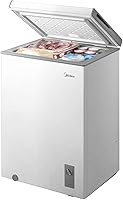
6 Best Large Chest Freezers (10 Cu Ft and Up), November 2026
The best 10 cu ft chest freezers and larger models include the Hamilton Beach 17 cu ft Garage-Ready Chest Freezer for major bulk stock-ups, the BLACK+DECKER 13 Cu Ft for growing food storage, and the BLACK+DECKER 10 cu ft Chest Freezer for first-time bulk buyers.
On this page (11 sections)
- Which 10 cu ft chest freezer or larger should you shortlist?
- The 6 large chest freezers and who should buy each
- How much freezer space will you actually use?
- Measure the room, the lid and the delivery route
- Can these freezers go in a garage or basement?
- Set up the freezer before loading groceries
- Organize a large chest without burying food
- Compare annual energy use, not watts alone
- Plan defrosting around the food inside
- Avoid these costly large-freezer mistakes
- Which 10 cu ft chest freezer or larger should you choose?
The BLACK+DECKER 10 Cu Ft is the best starting point here if you want a 10 cu ft chest freezer for a kitchen or temperature-controlled basement. The Hamilton Beach 17 is our top large-capacity pick for households with much bigger stock-ups.
Extra capacity helps only when you can reach, sort and use the food inside. A freezer that's too wide for the room or too deep for comfortable access creates work every time you open it.
Start with what size chest freezer you need if you're unsure about capacity. For an unconditioned space, compare our best chest freezers for the garage and read the garage ready chest freezers guide.
Our picks at a glance
-
1
 Best for major bulk stock-ups
Hamilton Beach 17 cu ft Garage-Ready Chest Freezer
8.6/10 our score
See it on Amazon -
2
-
3
 Best for first-time bulk buyers
BLACK+DECKER 10 cu ft Chest Freezer
7.7/10 our score
See it on Amazon
Which 10 cu ft chest freezer or larger should you shortlist?
Shortlist the BLACK+DECKER 10 for indoor overflow storage, the BLACK+DECKER 13 for larger grocery loads, and the Hamilton Beach 17 for major bulk buying. The other choices serve narrower needs, including a lockable handle or a compact stated cabinet.
IceboxPicks compared capacity, dimensions, access features, placement guidance and warranty terms. The fixed scores rank the broader group, while your available space and storage habits decide which model belongs in your home.
| Product | Best for | Capacity | Size (W x D x H) | Placement | Our score |
|---|---|---|---|---|---|
| Hamilton Beach 17 cu ft Garage-Ready Chest Freezer | major bulk stock-ups | 17 cu ft | 70 x 28 x 35.04 in | Garage ready; confirm ambient limits | 8.6 |
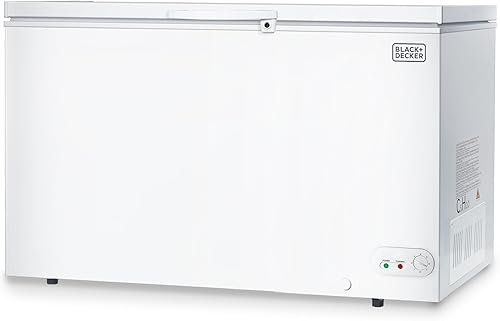
| BLACK+DECKER 13 Cu Ft | growing food storage | 13 cu ft | 50.2 x 29.5 x 33.5 in | Home or garage; confirm ambient limits | 8.1 |
| BLACK+DECKER 10 cu ft Chest Freezer | first-time bulk buyers | 10 cu ft | 40.7 x 29.5 x 33.5 in | Kitchen or temperature-controlled basement | 7.7 |
| Hamilton Beach 14 Cu Ft | shared storage areas | 14 cu ft | 70 x 28 x 35.04 in | Garage ready; confirm ambient limits | 7.2 |
| TABU 12 Cu Ft | noise-conscious households | 12 cu ft | 32 x 22 x 34 in | Confirm allowed room temperatures | 6.9 |
| TABU 10 Cu Ft | tight utility rooms | 10 cu ft | 25 x 22 x about 34 in | Confirm allowed room temperatures | 6.5 |
The dimensions above describe the cabinets, not the full installation space. Leave the ventilation and lid clearances required by each model's manual, plus room to stand and lift food comfortably.
Start with your largest normal grocery load
Choose around the food you regularly keep, including what remains when the next batch arrives. One unusually large holiday shop isn't always a reason to keep a much larger freezer running all year.
Picture your usual mix of flat meat packs, frozen vegetables, meal containers and bulky boxes. Equal volumes of food can need different amounts of room because rigid packaging leaves gaps that flexible bags don't.
The 6 large chest freezers and who should buy each
The Hamilton Beach 17 offers the most storage, while the BLACK+DECKER models provide clearer steps between moderate and larger capacity. Read each recommendation alongside its skip advice, especially if placement or access is tight.
Hamilton Beach 17 cu ft Garage-Ready Chest Freezer: Best for major bulk stock-ups
- 17 cu ft capacity
- Stay-open lid
- Removable vinyl-coated basket
- Front-access defrost drain
Our largest pick suits households that need substantial overflow storage and have a wide installation space. Confirm the allowed room temperatures before choosing an unconditioned garage.
Pros
- Largest capacity in this group
- Stay-open lid for loading
- Front-access drain
Cons
- Wide cabinet needs careful delivery planning
- Garage temperature limits need confirmation
Choose the Hamilton Beach 17 for large grocery batches, seasonal food storage or a substantial meal-prep reserve. Its 17 cu ft capacity is useful when smaller overflow storage would force you to split food between several places.
The cabinet measures 70 x 28 x 35.04 inches and weighs 168 pounds empty. That calls for a wide installation area and a delivery plan that accounts for turns, steps and the final approach.
A stay-open lid helps while you sort packages, and the removable vinyl-coated basket keeps small items above the main load. The front-access drain is useful when you need to direct defrost water without reaching behind the appliance.
Skip it if you buy modest amounts or struggle to reach into a deep chest. Before using its garage-ready designation to choose a location, confirm the allowed ambient temperatures.
For a much smaller alternative, our Frigidaire EFRF7003 review covers a 7 cu ft freezer.
BLACK+DECKER 13 Cu Ft: Best for growing food storage
- 13 cu ft capacity
- Exterior temperature dial
- Power and compressor indicator lights
- Manual defrost with drain
A useful step up when a smaller freezer would leave little room after your main grocery trip. Its cabinet is substantially narrower than the Hamilton Beach 17.
Pros
- More storage without the widest cabinet
- Controls and indicators outside
- BLACK+DECKER provides a 1-year limited warranty
Cons
- Needs more wall space than the BLACK+DECKER 10
- Garage suitability depends on allowed room temperatures
Choose the BLACK+DECKER 13 when your grocery loads have outgrown basic overflow storage but the widest freezer would crowd the room. Its 13 cu ft capacity gives you space to separate meal prep from ingredients without moving to the largest cabinet here.
It measures 50.2 x 29.5 x 33.5 inches and weighs 123.4 pounds. Compared with its smaller sibling, the extra width deserves attention along narrow basement paths and beside parked cars.
The exterior dial and power and compressor lights let you adjust settings and check operating status without opening the lid. A removable basket handles small packages, while manual defrost uses an easy-access drain.
BLACK+DECKER describes this model for home or garage storage, but confirm the permitted room temperatures before using an unconditioned garage. A mention of garage use doesn't guarantee suitability for every climate.
Skip it if your usual food load would fit comfortably in the 10, or if retrieving items from the bottom would be difficult.
BLACK+DECKER 10 cu ft Chest Freezer: Best for first-time bulk buyers
- 10 cu ft capacity
- Exterior temperature dial
- Removable storage basket
- Manual defrost with drain
The clearest starting point for shoppers who want this exact capacity for indoor overflow storage. It saves wall space compared with the BLACK+DECKER 13.
Pros
- Exact match for the target capacity
- Exterior controls
- BLACK+DECKER provides a 1-year limited warranty
Cons
- Needs a suitable indoor location
- Manual defrost requires food-storage planning
Choose the BLACK+DECKER 10 for a first dedicated freezer when your refrigerator's freezer is crowded with bulk groceries and prepared meals. It matches the target 10 cu ft capacity without taking the wall space of the larger BLACK+DECKER.
The cabinet measures 40.7 x 29.5 x 33.5 inches and weighs 99.2 pounds. Its narrower body helps in a utility room, but you still need ventilation space and a clear place to stand.
You get exterior controls, power and compressor lights, a removable basket and a drain for manual defrost. These features suit straightforward food storage rather than a buyer seeking automatic frost removal.
Place it in a kitchen or temperature-controlled basement, the locations specified for this model. Don't borrow garage-use guidance from the larger freezer just because the two share a brand.
Skip it if large seasonal batches are your main reason for buying. Filling the chest completely on day one leaves little flexibility for the next grocery trip.
Hamilton Beach 14 Cu Ft: Best for shared storage areas

- 14 cu ft capacity
- Lockable external handle
- Removable vinyl-coated wire basket
- Front defrost drain
The lockable handle gives this freezer a clear role in shared storage areas. Its stated cabinet dimensions match the larger Hamilton Beach, so don't assume it saves floor space.
Pros
- Lockable external handle
- Front drain
- Aluminum interior liner
Cons
- Stated dimensions offer no space saving over the 17
- Garage temperature limits need confirmation
Choose the Hamilton Beach 14 when a lockable external handle matters in a shared storage area. Keep the key accessible to responsible adults, and remember that a lock doesn't replace keeping children away from the appliance.
Its 14 cu ft capacity sits between the larger BLACK+DECKER and the biggest Hamilton Beach. However, its stated dimensions match the Hamilton Beach 17, so lower capacity doesn't bring a smaller stated footprint.
The removable vinyl-coated wire basket helps separate small foods, and the aluminum liner forms the interior surface. A front drain supports manual defrost, while a power light gives a quick status check.
Hamilton Beach identifies it as garage ready, but confirm the allowed room temperatures for your location. A power light also doesn't show whether food is being held cold enough.
Skip this model if saving floor space is your main goal. Compare it with the 17 on usable storage and the value of the lock, rather than assuming it's the compact middle option.
TABU 12 Cu Ft: Best for noise-conscious households

- 12 cu ft stated capacity
- Seven-level temperature control
- Removable basket
- TABU claims sound of 40 dB or less
Worth considering when sound matters and you can confirm the unusually compact capacity-to-size combination. TABU states a sound level, but no garage approval or warranty term is provided.
Pros
- TABU claims sound of 40 dB or less
- Front temperature control
- Adjustable leveling legs
Cons
- Confirm usable capacity and cabinet dimensions
- Garage approval and warranty term need confirmation
Consider the TABU 12 when the freezer will sit near a room you use often and sound is a priority. TABU claims 40 dB or less, though that figure doesn't tell you how noticeable compressor cycling will be in your room.
The stated capacity is 12 cu ft, with exterior dimensions of 32 x 22 x 34 inches. That compact capacity-to-size combination needs confirmation before you plan around it, particularly because exterior measurements include insulation and machinery.
The front control has 7 levels, and a removable basket keeps smaller foods accessible. The lid opens through a stated 45 to 90 degree range, but check full opening clearance instead of assuming a low shelf will work.
TABU advises keeping the freezer upright for at least 24 hours before use. Confirm the warranty term and allowed room temperatures before ordering.
Skip it if you need a confirmed garage option or can't resolve the capacity and fit questions. A small stated cabinet isn't enough reason to choose it.
TABU 10 Cu Ft: Best for tight utility rooms

- 10 cu ft stated capacity
- Seven-level temperature control
- Removable basket
- TABU claims sound of 40 dB or less
A conditional choice for a tight room because its stated cabinet is unusually small for the stated capacity. Confirm the exact model, internal space and installation requirements before ordering.
Pros
- Narrow stated cabinet
- Removable basket for small food packages
- Adjustable leveling legs
Cons
- Capacity and exterior size need confirmation together
- Height details differ slightly
- Garage approval and warranty term need confirmation
Consider the TABU 10 only after confirming that its cabinet and internal storage meet your needs. Its 25-inch stated width could help in a tight utility room, but the unusually compact exterior needs checking against the stated capacity.
The dimensions give a 22-inch depth and roughly 34-inch height, with a small height difference between the details. Ask for the exact model measurements, usable internal dimensions and installation requirements together.
Like the larger TABU, it has a front temperature control, removable basket and adjustable leveling legs. TABU also makes the same sound claim, so there isn't a basis here to call this one quieter than its sibling.
Its narrower opening may matter when loading wide meal containers or lifting a loaded bin. Check those needs before focusing on cabinet width alone.
Skip it if you need dependable fit information immediately or plan to use an unconditioned garage. Choose after resolving those questions, rather than treating the smallest dimensions as a guaranteed advantage.
How much freezer space will you actually use?
Choose capacity for your largest regular food load plus room to sort it, rather than filling every cubic inch. Extra space earns its place when it supports food you buy and use on a normal schedule.
A household that shops weekly may need less overflow storage than a smaller household that freezes garden produce or buys meat in large batches. Household size alone doesn't settle the choice.
When a 10 cu ft chest freezer is enough
A 10 cu ft chest freezer makes sense when you want separate zones for groceries, cooked meals and a modest reserve. It can work well alongside a refrigerator freezer that handles the foods you reach for every day.
Write a short inventory before ordering: usual meat packs, meal containers, vegetables and bulky items. Include the old food still waiting when the next grocery load arrives.
If that inventory looks modest, compare 7 cu ft chest freezers before committing to a larger cabinet. Smaller storage may be easier to reach and keep organized.
When moving up is worth the space
Move up when large batches are routine and would regularly crowd the smaller chest. The BLACK+DECKER 13 adds 30 percent capacity over a 10, while the Hamilton Beach 17 adds 70 percent.
Don't confuse storage capacity with the amount of fresh food an appliance can freeze at once. Follow the manual's loading guidance when adding a large unfrozen batch, and avoid surrounding it with foods you need to keep firmly frozen.
Measure the room, the lid and the delivery route
Measure the complete installation and delivery path, including space for your body and the open lid. Cabinet dimensions alone won't tell you whether a freezer works in a crowded room.
Mark the proposed cabinet outline on the floor with removable tape. Then stand where you'll load it and check whether nearby doors, drawers or a parked car block access.
Use each manual's ventilation requirements rather than a single clearance number for all six freezers. A flat back doesn't remove the need for airflow.
Check overhead shelving with the lid fully open, and allow enough room to lift a basket straight out. A lid that opens partway may still leave you unable to remove a large package.
Measure doorways at their narrowest clear opening, including protruding hardware. Compare both cabinet width and depth, since orientation through a doorway affects the fit.
Turns need their own check, especially at the bottom of stairs. Ask the delivery company about inside placement, stairs and packaging removal before you choose a service.
BLACK+DECKER gives a 30-inch height for both models with the door and feet removed. Treat disassembly as a manual-led delivery option, not permission to tilt or dismantle an appliance however it fits.
Can these freezers go in a garage or basement?
Choose a location within the exact model's allowed ambient temperature range. The room's summer highs and winter lows matter more than whether you call it a garage, basement or utility room.
The Hamilton Beach models carry a garage-ready designation, but the supplied facts don't guarantee their ambient limits. The BLACK+DECKER 13 mentions garage storage; the 10 specifically points to a kitchen or temperature-controlled basement.
Neither TABU has garage approval established here. For any uncertain model, obtain the allowed room-temperature range before ordering for an unconditioned space.
A basement can also be unsuitable if it floods, stays damp or makes servicing difficult. Keep the freezer away from direct sun and heat sources, with its plug accessible.
Use our guide to choosing a freezer for a hot or cold garage to assess the room. Garage ready doesn't mean weatherproof or approved for outdoor exposure.
Set up the freezer before loading groceries
Let the freezer settle as directed, then reach a stable storage temperature before adding food. Arrange the first grocery load after setup rather than timing delivery around a car full of frozen food.
Keep the appliance upright during transport where possible, and follow its manual after any tilting. TABU specifies at least 24 hours upright before use; use the other models' own instructions for their wait times.
Place it on a firm, level surface and adjust the feet according to the manual. Check that the lid closes evenly and that nearby objects can't press on the power cord.
Follow the electrical instructions, including outlet and circuit requirements. Don't make an extension cord or power strip the solution to a poorly placed appliance.
Use an appliance thermometer to check the storage temperature rather than guessing from a numbered dial. The USDA recommends 0 F or below for freezer storage in its freezing and food safety guidance.
Our deep freezer thermometers and alarms guide explains monitoring options. Indicator lights show operating status, but they don't replace a temperature reading.
Organize a large chest without burying food
Use small, liftable groups and a simple inventory so food near the bottom stays part of your meal plan. A large freezer loses much of its value if older packages disappear under new purchases.
Assign zones for meat, vegetables, prepared meals and foods you use less often. Put small loose packages in the upper basket so they don't drop between larger items.
Freeze suitable foods in flat, meal-size packages and label them with contents and dates. Move older packages into the easiest-to-reach position when you add groceries.
Measure the interior before buying bins, including any raised area over the compressor. Check that a full bin will lift through the opening without catching the basket supports or lid.
Keep bin loads manageable instead of making one heavy container for all your meat. For suitable shapes, see our chest freezer organizers guide.
A paper inventory beside the freezer can be enough if you update it as food goes in and out. Our step-by-step chest freezer organization guide helps turn that plan into a routine.
Compare annual energy use, not watts alone
Use annual energy consumption to compare running needs across similar freezers. A wattage figure measures power under a stated condition, while the compressor switches on and off during normal use.
The supplied watt figures aren't a consistent basis for ranking all six models. Room temperature, thermostat setting, lid openings and the food load also affect actual energy use.
Look for the EnergyGuide estimate for the exact model and compare annual kilowatt-hours. ENERGY STAR's freezer guidance explains what to consider when choosing an appliance.
Don't assume that buying the largest freezer now will save energy later. Choose storage you'll use, and keep ventilation openings clear once it's installed.
Plan defrosting around the food inside
For a large manual-defrost freezer, food relocation comes before melting the frost. Both BLACK+DECKER and both Hamilton Beach models use manual defrost with a drain; confirm TABU's maintenance procedure in its manual.
Plan the job when supplies are low and arrange another freezer or suitable insulated storage. Avoid a large grocery shop just before maintenance.
Disconnect power according to the manual and prepare for meltwater before opening the drain. Check where the water will go, especially on finished floors or in a basement without a nearby floor drain.
Never chip ice with a knife or other sharp tool. Don't add a heater, boiling water or another heat source unless the manual specifically allows that method.
Clean with a method approved for the interior, then dry the cabinet before restarting. Let it return to storage temperature before moving food back.
Our guides to defrosting a chest freezer and cleaning a deep freezer cover the process. Between larger cleanups, wipe spills and keep crumbs away from the lid seal.
Avoid these costly large-freezer mistakes
The biggest mistakes are buying excess space, guessing at garage suitability and overlooking access. Resolve those points before delivery, when changing your choice is much easier.
- Buying for one rare event: choose around repeat food habits, with a separate plan for unusual loads.
- Treating smaller capacity as a smaller cabinet: the Hamilton Beach 14 has the same stated dimensions as the 17.
- Assuming related models share placement approval: the BLACK+DECKER 10 and 13 have different placement descriptions.
- Choosing TABU by exterior size alone: confirm usable capacity and dimensions together before planning a tight installation.
- Using a thermostat number as a temperature reading: check with an appliance thermometer.
- Forgetting service access: keep the drain, plug and ventilation areas reachable.
- Loading without a rotation plan: label food and bring older packages forward before they become hard to find.
Warranty details deserve a check too. Hamilton Beach provides a 1-year term for both models, while BLACK+DECKER provides a 1-year limited warranty for each of its two.
Confirm what parts, labor and transport are covered, and obtain TABU's warranty term before ordering. Keep the receipt and model information somewhere you can reach without moving a full freezer.
Which 10 cu ft chest freezer or larger should you choose?
Choose the BLACK+DECKER 10 when a 10 cu ft chest freezer covers your normal food load and you have a suitable indoor location. Move to the BLACK+DECKER 13 when regular stock-ups need more room and its wider cabinet fits.
Choose the Hamilton Beach 17 for the largest recurring loads in this group. Consider the Hamilton Beach 14 when its lockable handle serves a clear need, rather than expecting it to save floor space.
Choose either TABU only after resolving its capacity, dimensions, placement and warranty questions. Its sound claim may matter near living areas, but those buying details come first.
Before ordering, match your food inventory to the chest freezer size guide. Then confirm the delivery route and installation clearances for the exact model you've chosen.
Our top 3 picks at a glance
-
1
Best for major bulk stock-ups
Hamilton Beach 17 cu ft Garage-Ready Chest Freezer
8.6/10 our score
See it on Amazon -
2
-
3
Best for first-time bulk buyers
BLACK+DECKER 10 cu ft Chest Freezer
7.7/10 our score
See it on Amazon
Frequently asked questions
Is a 10 cu ft chest freezer big enough for a family?
A 10 cu ft chest freezer can suit a family that needs overflow space for bulk groceries and prepared meals. Choose by the largest amount you store between shopping trips, not household size alone; allow room for bins, awkward packages and food you add before older supplies are finished.
How heavy is a large chest freezer?
The freezers here with stated weights range from 99.2 to 168 pounds before food is added. Arrange delivery help and equipment suited to the appliance, stairs and floor surfaces; ask the carrier about inside placement, and don't assume two people can safely manage every route.
How much clearance does a large chest freezer need?
Use the installation clearances in the exact model's manual rather than applying one gap to every freezer; measure room for ventilation, the open lid, the power connection and drain access. A flat back doesn't mean the cabinet can sit against a wall without a ventilation gap.
Will a large chest freezer fit through a standard doorway?
It may fit, but measure the clear opening and the entire delivery route before ordering; compare the cabinet's depth as well as its width, and allow for turns, handles and packaging. Remove appliance parts only when the manual permits it, and arrange professional help for difficult access.